
Modernizing Water Distribution Systems With Advanced Metering Infrastructure
By Ashish Kolte
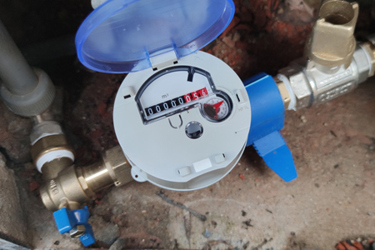
In this environment, the water sector continues to strive for higher efficiency, while at the same time wrestling with ageing assets, water scarcity, rising energy prices, and the pressures of regulation. The International Water Association (IWA) states that water losses through non-revenue water (NRW) equate to nearly 126 billion m³ of treated water every year worldwide, with a global loss of $39 billion per annum. much of this loss can be traced back to distribution networks, where manual reading of mechanical meters and the lag time associated with detecting leaks, prevent the collection of sufficient real-time operational information. The use of smart water meter systems or advanced metering infrastructure (AMI) has emerged as the vital element in a water network upgrade program.
This technology goes beyond the simple remote meter reading and automated billing of automated meter reading (AMR) technology, using two-way communications to relay near-real-time information on water usage, pressure variations, leak events, and usage patterns between smart meters and the utility. AMI has the ability to convert billions of individual water meter readings into operational information that supports more intelligent, forward-looking network management, rather than the often-too-late reaction to network issues.
Digitalization of water infrastructure is evident in the investments. DataIntelo research indicates that the AMI for water market is valued at USD 4.85 billion in 2025 and is expected to reach USD 10.66 billion by 2034 at a CAGR of 9.2%. Factors such as an increase in investment in smart utility infrastructure, a rise in smart water meter deployments powered by IoT, governmental push to decrease the rate of NRW in the region and seamless integration of AMI systems with SCADA, GIS, cloud analytics, and AI-enabled network management systems are driving the market growth.
The Engineering Need For Smart Distribution Networks
Quite often municipal water grids consist of 40- to 80-year-old pipelines, which makes leaks, burst pipes, and wrong metering much more common. Moreover, mechanical water meters get worn with age. According to the water quality, the build-up of sediment and wear the existing meters may consume 5–15% less than is consumed, reducing revenues directly.
The challenge for the utility, meanwhile, is to keep service reliable while lowering OPEX. Manual meter reading is labor-intensive, leads to errors, and requires up to several weeks to access consumption data, which leaves utility with no chance to detect steady flows or atypical usage until it turns into major losses. AMI adds a digital layer on the distribution system, enabling a utility to monitor the customer connections and network performance around the clock.
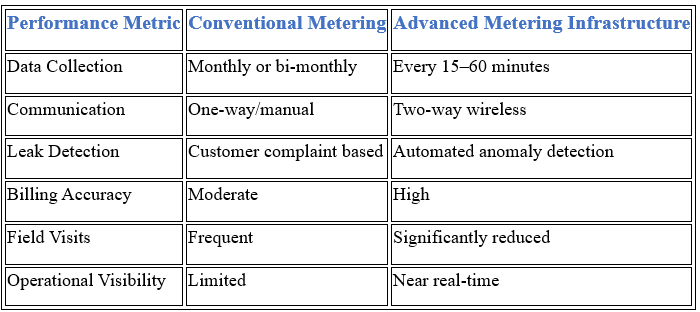
Table 1. Conventional Metering vs. Advanced Metering Infrastructure
Technical Architecture of an AMI System
A modern AMI deployment consists of several integrated components:
- Ultrasonic or electromagnetic smart water meters
- RF Mesh, Cellular LTE-M, NB-IoT, or LoRaWAN communications networks
- Data collectors or gateways
- Meter Data Management (MDM) system
- Geographic Information System (GIS)
- Supervisory Control and Data Acquisition (SCADA)
- Cloud-based analytics platform
The system collects consumption information at intervals that the user sets, commonly at 15 minutes per measurement, thus generating 96 measurements per client per day. The analysis of the collected information is therefore huge for hydraulic calculations and operation planning, as is evident if one has 100,000 clients and a daily average of 9.6 million records of consumption.
Reducing Non-Revenue Water Through Continuous Monitoring
One of the primary applications of AMI is reducing non-revenue water.
The IWA categorizes NRW into:
- Real losses (pipeline leakage)
- Apparent losses (meter inaccuracies and unauthorized consumption)
- Unbilled authorized consumption
AMI directly addresses all three categories by providing continuous consumption monitoring.
If a home has an uninterrupted flow of 0.2–0.5 liters per minute at 2 a.m., machine learning can detect that this is a likely leak and enable a prompt repair to stop a small leak becoming a huge water waste. Smart metering initiatives undertaken by utilities have reported quantifiable decreases in apparent loss due to enhanced meter accuracy and faster discovery of anomalous use.
Data Analytics Supporting Distribution Optimization
AMI generates far more than billing information. High-frequency consumption data enables utilities to perform advanced hydraulic analytics, including:
- Minimum Night Flow analysis
- District Metered Area (DMA) balancing
- Demand forecasting
- Peak-hour consumption profiling
- Pressure zone optimization
- Water age estimation
- Customer demand segmentation
Combining these datasets with SCADA flow measurements provides a comprehensive understanding of network behavior.
For example, pressure reductions of only 5–10% during low-demand periods can significantly reduce leakage rates while extending pipeline life and lowering pumping energy consumption.
Predictive Maintenance Through Smart Meter Analytics
Classic maintenance approaches: relying mostly on customer reports and scheduled inspections. AMI permits the transition to predictive maintenance by diagnosing wear of the infrastructure before an actual failure occurs. Utilities examine various data like:
- Continuous low-flow events
- Reverse flow incidents
- Pressure fluctuations
- Meter communication failures
- Unexpected demand spikes
- Consumption deviations from historical baselines
AI models process these datasets to help prioritize inspections and thus minimize emergency repairs while more effectively manage their maintenance budget. Instead of waiting for a system to fail simply because an asset is aging, utilities can prioritize rehabilitation based on how the asset is actually performing.
Improving Customer Service And Billing Accuracy
Billing disputes remain a major administrative burden for many utilities.
Digital AMI meters provide:
- High-resolution consumption records
- Automatic remote readings
- Tamper detection
- Reverse-flow alarms
- Consumption alerts
Customers also gain access to online dashboards displaying hourly or daily water use. Greater visibility encourages conservation and allows households to identify hidden leaks before receiving unexpectedly high bills.
For commercial and industrial customers, interval data supports water efficiency programs and process optimization.
Integration With Digital Water Technologies
AMI delivers maximum value when integrated with broader digital water infrastructure.
Typical integrations include:
- GIS
- SCADA platforms
- Digital twin models
- IoT pressure sensors
- Hydraulic simulation software
- Asset management systems
- AI-based predictive analytics
Together, the new systems provide a networked water grid to monitor the condition of the water assets, hydraulic operation, and customer demand on a real-time basis. Utilities are also able to correlate pressure fluctuations, flow meter readings, and customer demand irregularities to locate water leaks more efficiently and more quickly than ever before.
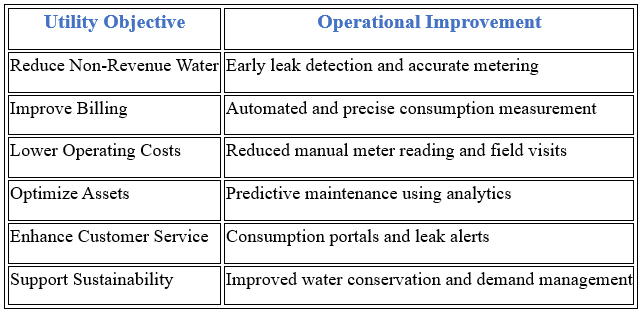
Table 2. Operational Benefits of AMI Deployment
Challenges During AMI Deployment
Despite its benefits, AMI implementation presents technical challenges.
Utilities must manage:
- Legacy infrastructure integration
- Cybersecurity risks
- Communication network reliability
- Large-scale data storage
- Workforce training
- Meter interoperability
- Capital investment planning
Cybersecurity is a special challenge for the AMI since it typically involves millions of interconnected meters collecting both operational and customer-centric sensitive data. Strong encryption, secure authentication mechanisms, and robust and continuous firmware upgrades are key characteristics of a modern AMI implementation.
Building Smarter Water Networks With AMI
It’s time to reimagine advanced metering infrastructure beyond automated billing. AMI has come of age and it’s no longer just about automating bills. AMI today offers the operational transparency, frequent consumption data, and predictive intelligence to form the digital backbone of the smart water distribution system, boosting utility efficiency and resilience. Smart meters integrated with wireless networks, GIS, SCADA, artificial intelligence, and cloud analytics can help utilities cut NRW, increase billing accuracy, manage water pressure, and make more informed investment decisions on the network infrastructure. In a world where water scarcity is an increasing challenge, and urban population growth continues unabated, AMI will be an integral part of a resilient, efficient, data-driven future.
Reference: https://dataintelo.com/report/advanced-metering-infrastructure-for-water-market
Ashish Kolte is a marketing manager at Market Intelo with expertise in marketing, market intelligence, and business strategy. He combines marketing insights with industry research to analyze market trends, identify growth opportunities, and provide data-driven perspectives on emerging industries and global business developments.