
Mixing It Up: How Active Tank Mixers Help Rehabilitate Aging Water Systems
By Bethany Thompson, Municipal Sales Manager, Kasco® Marine
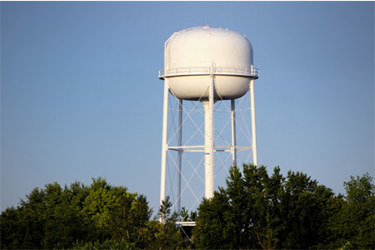
Across North America, many municipal water tanks and towers built decades ago remain in service. While structural rehabilitation often takes priority, internal water quality challenges—such as stratification, stagnation, and sediment accumulation—can quietly degrade disinfectant distribution and promote biofilm formation. These conditions may lead to customer complaints, fluctuating chlorine residuals, and exceedances of disinfection byproduct thresholds.
Traditionally, tanks relied on passive turnover from inflow and outflow to maintain water movement, but this approach often falls short in low-demand areas or systems with variable flow. Active mixing systems provide a reliable alternative, continuously circulating water to maintain consistent disinfectant levels, minimize temperature gradients, and reduce taste, odor, and maintenance issues.
Utilities report that after installing active mixers, regulatory compliance improves, particularly with EPA maximum contaminant levels for trihalomethanes, while flushing frequency and corrective interventions decline. Seasonal challenges—like chlorine degradation in summer or ice formation in winter—are mitigated as mixers maintain uniform thermal profiles year-round. Modern mixers are energy-efficient, typically costing under $900 annually to operate, a modest investment offset by improved performance and infrastructure longevity.
Refurbishment programs further extend mixer lifespan, reducing waste and capital costs while supporting sustainability goals. Best practices include selecting appropriately sized, easily installed, and NSF/ANSI-certified mixers, with monitoring options compatible with SCADA systems for added oversight.
Active mixing represents a proactive, cost-effective approach for utilities to safeguard water quality, enhance system resilience, and balance operational efficiency with long-term planning, ensuring communities receive safe, reliable water now and in the future.
Get unlimited access to:




Enter your credentials below to log in. Not yet a member of Water Online? Subscribe today.