
Mining Use Case: Nelson Tunnel Superfund Site, Creede, Colorado
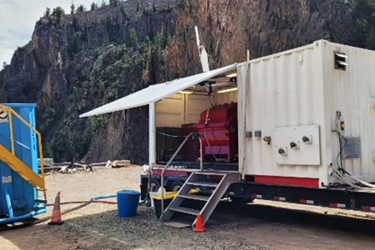
Managing Acid Mine Drainage (AMD) in remote, rugged terrain presents significant logistical and technical hurdles. High concentrations of dissolved metals, such as zinc, cadmium, and manganese, frequently threaten local watersheds, necessitating treatment solutions that are both highly effective and physically compact. Traditional chemical precipitation often requires extensive footprints and complex chemical supply chains that are difficult to maintain in isolated locations.
Electrocoagulation (EC) has emerged as a streamlined alternative, particularly when utilizing reactor designs that prevent electrode passivation and self-clean during operation. This technology provides a dual benefit: it achieves superior contaminant reduction—often exceeding 90% for critical heavy metals—while naturally buffering the pH of acidic influent without the need for caustic chemical additions. The resulting metal-rich sludge is significantly less voluminous than traditional chemical sludge and typically passes toxicity leaching standards, simplifying disposal. By integrating these reactors into mobile, trailer-mounted systems, operators can deploy robust treatment infrastructure in small footprints, ensuring clean water returns to the environment with minimal site impact.
Get unlimited access to:




Enter your credentials below to log in. Not yet a member of Water Online? Subscribe today.