
Metering as a Service Improves Jackson, MS, Water Infrastructure
By Allison Wallace
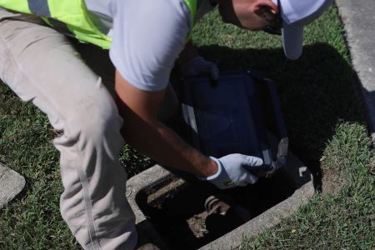
The city of Jackson, Mississippi, faced a water crisis that went beyond the tap. What began as an ambitious plan to modernize its water metering infrastructure in 2014 became a logistical and financial nightmare, costing the city millions in lost revenue and declining public trust.
Metering as a Service (MaaS) offered the city an alternative option. This model not only replaced its failing infrastructure, but also provided long-term maintenance and support — all without requiring upfront capital investment.
Jackson’s Sater Metering Challenges
Jackson provides water to approximately 150,000 residents and businesses through its Water/Sewer Utilities Division. Its mission is to deliver safe, clean drinking water while maintaining the reliability of its distribution system.
In 2014, Jackson wanted to modernize its residential and commercial water metering infrastructure by installing 60,000 new meters. The goal was improved accuracy, efficiency, and revenue collection. Instead, thousands of meters were installed incorrectly, and many did not function as intended, creating a serious logistical challenge for the city and a public relations problem.
The outcome was widespread billing inaccuracy: some customers stopped receiving bills altogether, while others experienced unexplained spikes in their bills, sometimes thousands of dollars. The city’s water revenues fell by an estimated $2 million per month, resulting in over $20 million in losses during the year.
In 2019, Jackson filed a lawsuit against the original meter provider. After years of financial strain and public frustration, the city reached a $90 million settlement in 2020, recovering much of its initial investment. However, leadership still faced a significant challenge: the need for a reliable, accurate, and transparent water metering system to restore customer confidence and stabilize operations.
Adopting Metering as a Service
In November 2020, Jackson adopted a new approach through a MaaS model under a Master Utility Service Agreement (M-USA) with Sustainability Partners. The agreement provided for the procurement, replacement and long-term maintenance of a comprehensive metering system without requiring upfront capital from the city.
The program included installing more than 65,000 residential and commercial water meters, deploying network collectors and data management software and integrating with a new billing system. Training for city staff and customer service staff was included, along with the implementation of acoustic leak detection for both distribution and customer service lines.
Deployment began in early 2021. At that time, Jackson’s water system faced additional strain when operational failures at a treatment plant disrupted service for several weeks. The U.S. EPA and the Department of Justice subsequently created JXN Water and appointed Ted Henifin as interim third-party manager to oversee system-wide remediation, which included the continued implementation of the metering project.
Despite these circumstances, JXN Water and the project team proceeded with the rollout, coordinating installations and data integration across multiple departments. The project emphasized transparency, real-time monitoring, and measurable operational data to support improved billing accuracy and water loss management.
Increased Water Revenue Collection
Within the first month of the new MaaS deployment, Jackson’s monthly water revenue collections rose from approximately $3.6 million to $7.2 million. The increase reflected more accurate billing and improved metering data, not rate adjustments.
While the initial increase in revenue was significant, it represented a short-term correction as the system came online. Over the following three years, the city’s water revenues stabilized at approximately $8 million per month, a sustained improvement that reflects accurate metering and consistent billing rather than a temporary spike.
Acoustic leak detection data provides early warning of system leaks, enabling maintenance crews to intervene before major losses occur. The automated meter reading (AMR) and advanced metering infrastructure (AMI) components also give JXN Water staff better visibility into usage trends and system performance.
Because the M-USA model required no upfront capital investment, the city was able to allocate funds toward other urgent needs while improving long-term system sustainability. The arrangement also ensures ongoing maintenance and technology updates to prevent the types of failures experienced under the previous system.
Lessons Learned
Jackson’s experience underscores the importance of thorough planning, transparent operations and maintenance throughout the metering modernization lifecycle. The city’s early challenges demonstrate how installation quality, billing integration and customer communication can significantly impact the success or failure of a metering program.
The Metering as a Service-based structure offered a different option — one that aligned costs with performance and allowed Jackson to address infrastructure challenges despite financial constraints. The results demonstrate that consistent data, proactive leak detection, and a sustainable operations plan can restore both fiscal stability and public trust.
Infrastructure projects can be much more challenging than many municipalities realize. Obtaining a bond or grant for the project does not mean that the result will be guaranteed — and failure can have lasting impacts on a community, not only through increased costs and headaches, but negative public perception.
As Jackson continues to rebuild confidence in its water system, the Metering as a Service approach provides a model for other municipalities facing similar challenges. By combining advanced metering infrastructure with long-term operational support, the city has taken meaningful steps toward reliable service delivery, accurate billing, sustainable water management, and increased customer satisfaction.
 Allison Wallace is an Infrastructure Specialist for Sustainability Partners, based in Chandler, AZ. Born and raised in Mississippi, Wallace earned her Bachelor of Science degree in Civil Engineering with an emphasis in Environmental Engineering from Mississippi State University.