
Managing Growth Under Water Constraints: What Utilities Can Learn From Industrial Water Users
By Greg Rankin
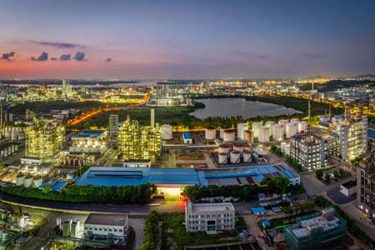
As communities and industries compete for finite water supplies, utilities are looking for strategies that support economic growth while reducing pressure on existing resources.
Water scarcity is increasingly becoming a utility management challenge. While data centers have captured much of the public attention, utilities across the country are facing broader questions about how to accommodate industrial growth, maintain reliable service, and protect long-term water supplies.
One recent example emerged in South Texas, where officials in Corpus Christi were preparing for a Level 1 Water Emergency that would have required significant reductions in water use by industrial customers, including several refineries. Rainfall delayed those restrictions, but the situation highlighted a challenge many utilities recognize: balancing residential demand, economic development, and finite water resources.
For utilities, the question is no longer simply whether additional water supplies can be developed. It is also how existing supplies can be used more efficiently. As a result, many utilities are working more closely with large water users to identify opportunities for conservation, reuse, and operational improvements that can reduce demand without compromising industrial productivity.
Some industrial facilities have already demonstrated approaches that lower water consumption significantly while maintaining reliable operations. Those experiences offer useful insights for utilities evaluating long-term demand management strategies.
The Solution Often Starts With Existing Demand
According to Will Sarni, a water strategy expert focused on corporate water strategy, risk, and resilience, successful water management begins by understanding how water is actually used and where demand can be reduced.
"Finding new water is important, but it's not enough by itself," Sarni said. "The companies that are better prepared will be the ones that quantify business value at risk in their operations and supply chains and reduce avoidable demand before restrictions force the issue."
That same principle applies at the utility level. New supply projects, interconnections, reuse systems, and storage expansions are important tools, but they often require significant capital, long timelines, and public support. Demand reduction can sometimes create additional capacity more quickly and at lower cost.
Among large industrial customers, cooling systems frequently represent one of the largest opportunities for water savings.
Cooling Efficiency Creates Water Savings
For refineries, power plants, data centers, and many manufacturing facilities, cooling towers account for substantial water use. Because operators can closely monitor makeup water, blowdown, and water quality, cooling systems often provide a measurable opportunity for conservation.
"Cycles of concentration is really a measure of how many times you can reuse the water before it has to be discharged," said Steve Berens, CEO of Clear Comfort. "If you can safely run at higher cycles, you reduce the amount of water that has to be blown down and replaced."
For utilities, improvements like these are noteworthy because they can reduce demand without requiring industrial customers to curtail production. In regions facing supply constraints, that distinction can be important. Water efficiency measures that preserve economic activity are often more attractive than restrictions that limit growth.
Treatment Strategy Can Enable Conservation
Higher cycles of concentration can reduce demand, but only if cooling systems remain properly managed. Excessive biological growth, scaling, corrosion, or poor water quality can create operational risks that offset conservation benefits.
As a result, industrial facilities are increasingly evaluating treatment approaches that allow water to remain in circulation longer while maintaining system performance.
Advanced oxidation process (AOP) technologies are one example. In cooling tower applications, these systems are used to help control biological growth, reduce biofilm formation, and support cleaner circulating water. Field evaluations have shown that such approaches can increase cycles of concentration while reducing makeup water demand.
For utilities, these technologies represent more than a customer-level operational improvement. They illustrate how demand management can be achieved through process optimization rather than simply asking customers to use less water.
Efficiency Before Reuse
Another lesson utilities may find valuable is the sequence many industrial facilities follow when pursuing water reuse.
Reuse can reduce dependence on potable supplies, but it often becomes more complex when source water contains elevated concentrations of organics, dissolved solids, biological material, or treatment residuals.
Berens argues that reducing water demand should often come before expanding reuse infrastructure.
"If you want to reclaim water, the first thing to do is use less of it," Berens said. "The second is to make sure the water you are trying to reclaim has a better matrix."
For utilities developing long-term water supply strategies, that perspective is significant. Conservation, efficiency, reuse, and supply development are often discussed separately, but they can be most effective when approached in sequence. Reducing avoidable demand can make future reuse projects more practical and more economical.
Supporting Growth While Protecting Supply
As utilities work to accommodate industrial expansion, population growth, and increasingly variable water supplies, demand management is becoming an important complement to new infrastructure investments.
The experience of large industrial water users demonstrates that meaningful reductions in consumption can often be achieved through operational improvements, treatment optimization, and targeted reuse strategies. For utilities, these examples provide a useful roadmap for engaging major customers in conservation efforts while continuing to support economic growth.
New supplies will remain essential in many regions, but utilities may find that part of their future capacity already exists in the water their customers use today.
 Greg Rankin is a Houston-based freelance writer with more than 20 years of experience writing about water, wastewater, and other industrial sectors.