
Liquid-Only Sewers: A New Approach To Decentralized Wastewater Collection
By Brenda Faz-Cresie
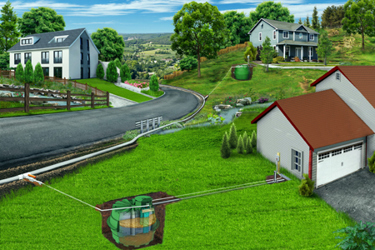
An examination of the concept of liquid-only sewers, their operational principles, and the numerous benefits they offer for communities
The management of wastewater is a growing challenge for urban and rural communities alike, especially in areas experiencing rapid population growth or with limited access to centralized sewage infrastructure. Traditional sewer systems, while effective, often require significant capital investment, invasive implementation measures, and complex maintenance. As a result, innovative decentralized wastewater solutions are necessary to address the needs of communities or commercial areas in need of wastewater service. One such solution is the liquid-only sewer (LOS) system.
Understanding Liquid-Only Sewers
A liquid-only sewer system is a type of small-diameter sewer pressurized network designed to transport only the liquid fraction of household wastewater. In a typical LOS setup, solids are separated from the wastewater at the source — usually within a septic tank or interceptor tank — before the liquid effluent is conveyed through small-diameter pipes to a treatment facility or final disposal site. This contrasts with conventional sewers, which transport both solids and liquids together in large-diameter pipes and require a larger pipe diameter and scouring velocity to prevent solids accumulation over time.
Key Components Of LOS Systems
- Interceptor or Septic Tanks: Each connected property is equipped with a tank that retains solids and allows only the clarified liquid to flow into the sewer line.
- Small-Diameter Sewer Pipes: The system relies on small diameter pressurized pipes typically 2–3”, as they only transport liquid waste.
- Effluent Transport: The clarified liquid effluent is transported, either by gravity or with the assistance of high head turbine pumps, to a centralized or semi-centralized treatment plant.
- Treatment and Disposal: The effluent is treated at a facility before being safely discharged into the environment or for reuse.
How Liquid-Only Sewers Work
The process begins at each household or facility, where wastewater enters a septic or interceptor tank. These tanks are designed to retain solid materials — such as solids or grease, and other debris — while allowing only the settled, clarified liquid to discharge into the LOS pipeline. Because the solids remain at the source, the effluent entering the sewer is largely free of blockages that commonly afflict conventional systems. LOS is designed to be water-tight, minimizing I&I (inflow and infiltration) of groundwater or surface water into the wastewater system.
The small-diameter pipes are typically laid at shallow depths and follow the natural contours of the land, reducing the need for extensive excavation. The reduced solids load allows for flatter gradients and more flexible routing. Installation can even be done by directional boring to reduce or eliminate excavation completely.
LOS is the only wastewater collection system that provides primary treatment prior to conveyance. The clarified liquid is delivered to a treatment plant for further treatment before safe discharge or reuse. When advanced treatment is not required, the clarified liquid can discharge directly to community scale drainfields.
Benefits Of Liquid Only Sewers For Decentralized Wastewater Collection
- Cost-Effective Infrastructure
- LOS systems use smaller pipes and require shallower trenches, significantly lowering construction and material costs compared to conventional sewers.
- Collection systems can be designed without the need for lift stations.
- Maintenance is less intensive due to fewer blockages. Less maintenance equipment is required than a conventional gravity sewer system and there is less need for frequent cleaning.
- Pressurized systems can utilize high head turbine pumps, which have a longer design life? and are easy to maintain.
- LOS units can be added online to accommodate the growth of the service area and infrastructure needs, without impact to existing system operation.
- Transporting liquid only potentially allows for smaller, more cost effective decentralized wastewater treatment systems.
- Suitable For Challenging Terrain
- LOS systems can easily adapt to hilly, rocky, or densely populated areas where installing large, deep sewers would be impractical or prohibitively expensive.
- Flexible pipe routing is possible due to the absence of solid transport requirements and an added pressurized system.
- Reduced Environmental Impact
- By separating solids at the source, LOS systems minimize the risk of untreated solids entering the environment due to sewer overflows.
- The smaller construction footprint helps preserve natural landscapes and reduces excavation-related disturbances.
- LOS eliminates inflow and infiltration concerns.
- Improved Public Health
- Proper solids separation and treatment reduce the risk of pathogen exposure and contamination of water sources.
- Reliable wastewater removal helps prevent the spread of waterborne diseases.
- Scalability and Flexibility
- LOS networks can be scaled up or extended as communities grow, with minimal disruption and additional investment.
- They are well-suited for phased development, such as in new housing projects or small to mid-sized commercial developments.
- Lower Energy Requirements
- Gravity and Pressurized LOS systems reduce the need for large, costly energy-intensive pumping stations, further lowering operational costs.
- Less frequent maintenance and fewer mechanical components also contribute to energy savings.
- Enhanced System Reliability
- By removing solids at the source, LOS systems are less prone to blockages and operational failures.
- Routine maintenance is simplified, focusing primarily on septic tanks rather than extensive sewer networks.
Comparing Liquid Only Sewers To Conventional Sewers
Conventional sewers are engineered to handle both liquid and solid waste, necessitating large-diameter pipes, deep excavation, and robust pump stations. While they work well in dense urban environments with the resources to support them, they are often unsuited to rural, semi-urban, or informal development contexts. In contrast, liquid only sewers offer a decentralized, adaptable, and affordable alternative that aligns with the unique needs of these communities.
Key differences include:
- Pipe size: LOS pipes are smaller, easier to transport, and install.
- Installation depth: LOS systems are laid closer to the surface, minimizing excavation.
- Maintenance: Fewer blockages and easier access for repairs.
- Expansion: Simple to extend as population or demand increases.
Case Studies And Real-World Applications
Numerous communities worldwide have successfully implemented LOS systems, particularly in regions where centralized infrastructure is unattainable. For example, parts of the U.S., South Asia, Latin America, and Africa have adopted LOS networks to serve semi-urban and rural populations. These systems have demonstrated resilience, affordability, and adaptability in the face of challenging conditions.
Consider the case of a rural community network in South Alabama. In the late 1990s, the managers of a traditional water and gas utility needed a wastewater solution for local growing communities, otherwise they would risk losing their services to other local utilities. South Alabama Utilities (SAU) worked with local developers, where water infrastructure was available, to provide an extensive system of sewer lines to allow growth in areas where conventional septic systems would have been a challenge. Installing a 60-mile network of LOS effluent sewers and 14 decentralized wastewater treatment facilities, SAU has been able to provide service for 4,000 new homes, schools, apartments, and businesses. All this in an area that was previously identified as difficult to develop due to the lack of sewer utilities.
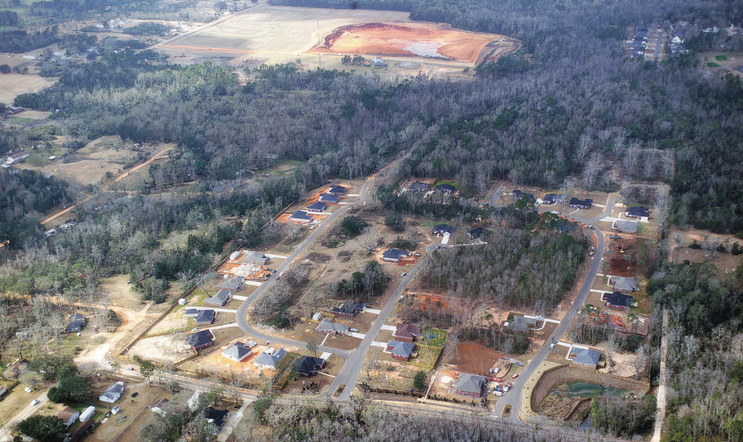
Champion Hills residential community in Mobile County, Alabama
Challenges And Considerations
Despite their benefits, LOS systems are not without maintenance considerations. Regular maintenance of septic and interceptor tanks is essential to prevent solids buildup. Pump performance, for pressurized systems, should be periodically checked and replaced as needed. Community education and engagement are critical to ensure proper system use and upkeep. Additionally, the ultimate disposal or treatment of collected solids must be managed responsibly to avoid secondary pollution.
Conclusion
Liquid sewer systems represent a transformative approach to decentralized wastewater collection. By separating solids at the source and transporting only liquid effluent, these systems offer a cost-effective, flexible, and environmentally responsible solution for communities lacking access to conventional sewers. Their adaptability to varied terrains, ease of installation, and lower maintenance requirements make them an attractive option for rural areas, peri-urban settlements, and rapidly growing communities. As the demand for sustainable sanitation infrastructure grows, LOS systems are poised to play a key role in shaping the future of decentralized wastewater management.
 Brenda Faz-Cresie is the Engineered Systems Regional Leader for Infiltrator Water Technologies, assisting designers, engineers, developers, and installers in designing decentralized wastewater treatment solutions for various commercial and industrial applications. Her territory includes the Southern Region of the U.S. as well as Latin America and the Caribbean. Prior to this role, Brenda was the Commercial Project Manager for Delta Treatment Systems. Before beginning her career at Delta, Brenda spent 15 years in the environmental testing industry, doing bench scale treatability studies for municipal wastewater plants as well as standard analytical testing for soils and waters under both Standard Methods and ASTM methodologies. Brenda worked closely with several municipal wastewater treatment facilities around the U.S. and Europe, assisting owners and operators in understanding the dynamics of their own processes and upsets, and analyzing potential impacts of new waste streams to their current operations. Brenda holds a bachelor’s degree in environmental science from Texas A&M University, and a master’s degree in environmental management from the University of Maryland University College.