
Human-AI Integration Is Redefining Digital Water Management Operations
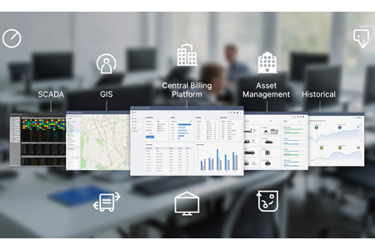
Agentic AI architectures operate as autonomous coordinators that interact with business systems. They also enable operator-driven customization and define which critical decisions require human validation, according to Xylem Vue
They facilitate gradual adoption, starting with advisory systems and increasing automation as trust and organizational maturity grow
They enable operators to express their needs in natural language, as the large language models (LLMs) underlying them are trained to understand and generate human language, unlike traditional software systems
The application of artificial intelligence to water processes and services is evolving rapidly. Agentic AI architectures are beginning to establish themselves as one of the main drivers of transformation in water operations, according to the Xylem Vue report Water technology trends 2026: a strategic guide to the future of smart water.
These autonomous agents perceive their environment, make decisions, and act to achieve objectives. They are enabled by Model Context Protocols (MCPs), which allow AI models (such as ChatGPT) to connect securely and seamlessly to external tools, data, and systems. Large language models (LLMs), artificial intelligence models trained on vast amounts of text to understand and generate human language, can now be deployed as coordinating agents that interact with business systems in a structured and governed way, rather than relying on isolated analyses, rigid dashboards, and monolithic models trained to perform individual tasks.
LLM-based agents use MCPs to gain controlled access to operational data, analytical services, and execution capabilities. According to David Torres, AI Product Manager at Xylem Vue, MCPs “define standardized mechanisms that enable agents to identify available tools, retrieve contextual information, invoke analytical processes, and, at times, trigger operational actions. This ensures that reasoning and execution occur within auditable, secure, and domain-specific parameters, which are essential in critical infrastructure such as the water sector.”
HIGH DEGREE OF CUSTOMIZATION AND OPERATOR-CENTERED DECISION SUPPORT
AI approaches enabled by MCP introduce a fundamentally different paradigm from traditional software systems in that they allow for operator-driven customization. Instead of relying on predefined dashboards, reports, and KPIs, operators can express their analytical needs and objectives in natural language. These “AI agents” convert these requests into structured processes for retrieving, analyzing, and visualizing data in real time.
In addition, they can retrieve, combine, and format data on demand, presenting them in the most appropriate format for decision-making, such as time-series charts showing KPI trends and predictions; summary tables and lists of anomalies classified by different criteria; and customized thematic maps that apply geoprocessing techniques and comparative analyses between DMAs and assets across different time windows and operating conditions
Utilities can define recurring analytical workflows, such as daily or weekly reports highlighting key events, anomalies, and KPIs, in addition to ad hoc queries. This flexibility reduces the friction between data and decision-making, enabling teams to focus on interpreting results and prioritizing actions, rather than gathering information and managing multiple systems.
HUMAN GOVERNANCE FOR CRITICAL ACTIONS
However, despite advances in AI agents, risks related to security, reliability, and liability persist, especially in critical infrastructure such as water systems, where a single mistake can have serious consequences. For this reason, “not all decisions should be automated and fully delegated to these systems”, as David Torres, AI Product Manager at Xylem Vue, pointed out.
MCP-based agent architectures incorporate human-in-the-loop governance, enabling the definition of which critical decisions require human validation right from the design phase. This is why purpose-built MCP agents for the water sector are so important.
They can be designed to analyze conditions and generate recommended actions; clearly explain the reasoning and evidence behind each recommendation; and request explicit human approval before running certain predefined operations.
Common use cases include approving interventions, operational changes, emergency activations, and communications, while ensuring that expert judgment remains at the center of decision-making, supported by advanced analytics.
This human-AI integration facilitates gradual adoption, starting with advisory systems and increasing automation as trust and organizational maturity grow. Furthermore, human decisions become key data for evaluating and improving AI performance.
Regulatory constraints are translated into security controls within servers and MCP tools. LLMs provide some of the intelligence, but execution depends on the specific design of the MCPs for the water sector.
Xylem Vue is a secure, integrated, and agnostic analytics and software platform that can capture data from any source, including legacy solutions. The platform enables water utilities to maximize investments already made in existing technologies while moving further along their digital journey and breaking down data silos to provide a holistic, 360-degree view of their system. Xylem Vue offers a broad portfolio of modular applications, helping utilities unlock the true power of their data and solve their most pressing water cycle challenges more efficiently.
Source: Xylem Vue