
How UV AOP Treats Environmental Contaminants
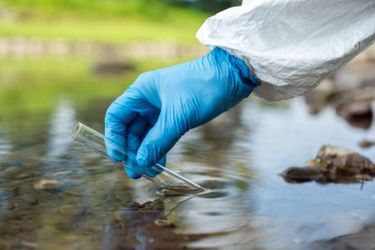
A growing variety of environmental contaminants exist at trace concentrations in water sources globally, requiring sophisticated treatment solutions. These chemicals, including 1,4-dioxane, NDMA, taste- and odor-causing compounds, and pharmaceuticals, may come from industrial, agricultural, or natural sources.
Advanced Oxidation Processes (AOPs), specifically those utilizing ultraviolet (UV) light, offer a solution to treat these compounds. UV AOP can be a cost-effective method, particularly for challenging contaminants like NDMA and 1,4-dioxane that resist other technologies such as reverse osmosis or carbon adsorption. A significant advantage of UV AOP is its ability to break down contaminants into their elemental components, eliminating the potentially hazardous residuals that other transfer-based methods create. The technology achieves this by using UV-photolysis or UV-oxidation, which generates highly reactive hydroxyl radicals to break chemical bonds without forming harmful by-products like THMs or bromate.
Get unlimited access to:




Enter your credentials below to log in. Not yet a member of Water Online? Subscribe today.