
How To Manage Warm-Season Biological Upsets In Wastewater Lagoons
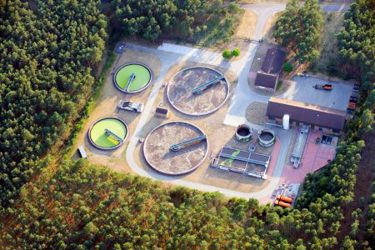
The rate of biological activity in a treatment lagoon is largely a function of water temperature. Once the water rises above roughly 59 °F (15 °C), metabolic rates increase across the entire microbial and invertebrate community. While this warmer temperature is favorable for the organisms performing treatment, it also accelerates the bacteria digesting organic load, the midge larvae developing in the sludge blanket, the algae drawing on dissolved nitrogen and phosphorus, and the sulfate-reducing bacteria converting organic carbon into hydrogen sulfide.
The effect on nuisance organisms is measurable: midge fly larval development compresses to three to four weeks once water exceeds 68 °F (20 °C), while the longer days ramp up algal growth wherever sunlight, bioavailable nitrogen and phosphorus coincide in slow-moving water.
Despite these challenges, operators can use warmer temperatures to their advantage. Because dosed bacterial cultures also scale their metabolism with temperature, warm water is the period in which introduced cultures establish and reproduce most quickly. Treating a problem before it becomes visible is more effective and practical than responding after it has taken hold. Once an operator observes a swarm, surface bloom or odor complaint, the target population has already passed through the steep part of its growth curve, and treatment becomes a matter of catching up rather than preventing.
Get unlimited access to:




Enter your credentials below to log in. Not yet a member of Water Online? Subscribe today.