
How The Wrong Pipeline Strainer Creates A False Sense Of Security
By Emily Newton
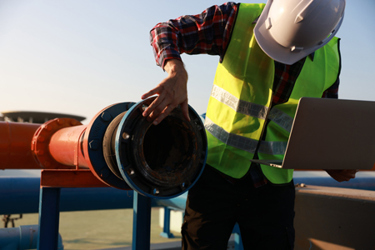
Given the complexity of modern municipal pumps and valve systems, a strainer will be insufficient as a comprehensive solution. Wastewater experts must balance their strainer’s capabilities with the amount and type of debris, or it can lead to system-wide failures. For example, a Wye strainer could be inadequate with water containing high solids. Instead, teams should examine the benefits of pumpline strainers and their geometry to avoid clogs, pressure inconsistencies, and other industry pain points.
Industry Default Analysis
Practicing conventional municipal wastewater treatment calls for generic pipe strainers. Turbine pumps can be loaded with basic basket strainers and other classic styles with minimal consideration for dirt-holding capacity or maintenance needs based on the environment. The presence of a strainer can provide only limited downstream protection. A holistic approach only becomes possible when selecting the right strainer for the specific application.
Every system has bespoke fluid mechanics and debris compositions. All treatment plants have varying concentrations of chemicals and solids at different densities. Wastewater teams should avoid decoupling the strainer’s purpose from these realities, as this reduces its effectiveness and its potential to serve as a genuine safeguard. It could lead to serious concerns like pump cavitation, leading to pressure changes that could cause flow-altering suction or discharge.
Theoretically, something as small as a temporary strainer could cause $40,000 of pump damage within days. These devices are often hidden from view and examined only during scheduled maintenance. Over time, they can become a liability if reviewed infrequently. Instead, teams must observe strainer geometry before it jeopardizes expensive capital equipment and worsens maintenance requirements.
Open Area Deficit And Suction Starvation
An inlet pipe’s area needs to match the strainer's surface area and account for factors such as viscosity and debris load. Engineering oversights could cause a mismatch here, meaning the strainer cannot handle the water intake. Experts should pick a strainer based on matched strengths.
For example, a wye strainer works optimally in low-viscosity and low-to-medium flow situations. It can also be installed horizontally or vertically in compact spaces, trapping solids on one side and allowing clean water to pass through the other. Its screen perforations catch large particulates and protect pump suction lines. Alternatively, basket strainers are best for high-flow spaces, such as cooling towers, to keep heat exchangers clog-free.
The pipes’ shapes, mesh size, and orientation affect how well debris is captured. As material accumulates, it affects pressure. If the open-area deficit is too great, vapor bubbles accumulate, alter local pressure and cause collapse due to low fluid level in the pump. These situations could be misdiagnosed as a broken seal or vibrational stress when they are simply due to an incompatible strainer size.
Deformable Solid Extrusion Under Escalating Pressure
The solids passing through wastewater systems differ from other industrial suspensions, which may be more uniform. For example, waste pipes have to handle hair, wipes, grease, and lotions, to name a few. These materials are more challenging to capture and separate than standard, firm solids.
If a pipe handles high volumes but has a fine, tight mesh screen, the strainer may suffer. It could clog quickly, despite how soft consumer waste materials may be. Their complex textures require a more nuanced design to prevent upstream pressure, especially because the debris can slide through over time as it deforms. Eventually, materials that should not pass through collect in downstream zones.
This poses myriad dangers, especially to sensitive components such as flowmeter electrodes and pressure sensors. These solids could coat and clog these tools, reducing operational reliability and equipment lifespan. Teams will only notice the damage when they open strainer bodies.
Intake Screen Failures Show How Protection Can Become A Blind Spot
Recent public-sector water infrastructure reviews show that screen design and monitoring gaps can turn protective equipment into a weak point. A May 2025 New Jersey Department of Environmental Protection engineering report on Trenton Water Works found that debris clogging was the biggest issue with the plant’s Delaware River intake screens. The report also noted there were no automatic controls or alerts to tell staff when a blockage was limiting flow into the plant.
The same review connected intake design to debris problems. After the system moved from horizontal traveling screens to vertical passive screens, operators reported more sand and grit entering the plant, likely because the new intake sat lower in the river channel. Frazil ice later clogged the intakes and forced a plant shutdown. The example shows how protective equipment must match the actual solids, flow path, and monitoring plan, or operators may not catch the problem until capacity is already reduced.
Strainer Characteristics Considerations
Additional features of conventional strainers could introduce more problems for pipe systems and treatment centers.
Engineers should take care with these features:
- Geometry-induced maintenance abandonment: Bottom-serviced strainers can make cleaning hazardous because the screens are removed and leave the system unprotected.
- Low-flow chemical feed traps: Poorly sized strainers in chemical dosing environments can create dead ends in water systems due to vapor lock, leading to blockages and loss of pump head function.
- Orientation mismatch and heavy sediment re-entrainment: Correctly orienting strainers ensures that materials settle properly rather than falling downstream.
- Insufficient blow-off flush valve: These only release loose in-line solids, and caked debris could still be adhered to the screen walls, confusing technicians about how clean the area is.
- Mesh sizing contradictions: The wrong size can create situations where water is over- and under-filtered, requiring experts to choose fine and coarse screens based on the connected equipment’s capabilities.
Each feature must be equally weighed to create the perfect straining environment. Otherwise, it may be unfit to handle the types and frequency of solids with certain mesh sizes, positioning, and valve functionality.
Operational Efficiency Framework Steps
Knowing the consequences of inadequate strainer selection helps managers make smarter decisions moving forward.
1. Close the Monitoring Loop
Strainers remain mostly out of sight, meaning monitoring can boost the effectiveness of any system. Supervisory control and data acquisition SCADA systems allow teams to have constant oversight of what was previously hidden knowledge. Many signs of a pressurized system can be detected early, protecting capital investments and reducing the probability of contamination.
2. Analyze Solid Rheology
Start by examining the solids the water contains. Water containing hard particle dispersion from the food sector will be different from that of a cosmetics manufacturer. For example, mesh partitions are ineffective against algae and require wedge-wire screens. Pipe scale requires heavy-gauge perforations and materials that resist impact and corrosion. The system’s burdens will determine the mesh and strainer type that’s most effective.
3. Establish the Open Area Ratio
Analyze the volume and add enough clearance to provide sufficient area, with the potential to install a multi-basket housing. These considerations make strainers easier to clean and maintain if they disperse the load effectively. Large holding capacities are less ideal than distributing the volume.
4. Match Geometry to the Physical Workspace
It is more practical to use basket-style strainers rather than bottom-drop units to prevent messy spills and control flow rates. Considering this setup, alongside other geometric criteria such as orientation, can determine how much and how well each strainer handles its solids. This helps the system pause flows when necessary, as a blocked line could overwhelm the pipes and pumps.
Select the Right Strainer For Each Application
Wastewater teams can immediately enhance the effectiveness of their piping and treatment systems with the right strainer. They will more effectively capture and filter contaminants and solids by considering the characteristics of the population and environment before assuming that a standard strainer will work. Informed selection could create a more stable, cleaner, longer-lasting, and sustainable system for managing over extended periods of use.
 Emily Newton is an industrial journalist. She regularly covers stories for the utilities and energy sectors. Newton is also editor-in-chief of Revolutionized (revolutionized.com).