
Geospatial Information Is Redefining Water Management And Digital Infrastructure Planning At A Global Scale
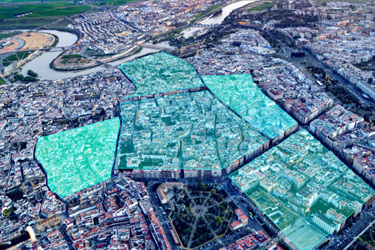
In a world where river basins are under increasing strain, weather patterns are becoming less predictable, and digital infrastructures are expanding at an unprecedented pace, territory, climate and water demand can now be understood as a living, dynamic and modelable system
Water speaks, and for the first time, thanks to Geographic Information Systems (GIS), we are able to truly listen to it in all its complexity. Visualizing water on a map—who uses it, who needs it and when—makes it possible to support growth without compromising communities or ecosystems, according to Xylem Vue.
In a world where river basins are increasingly stressed, weather patterns are becoming less predictable and digital infrastructures are expanding at an unstoppable pace, “GIS have moved beyond being auxiliary tools to become the analytical core supporting water, energy and digital infrastructure planning at a global scale,” says Sergio Aznar, Head of GIS Product at Xylem Vue.
According to the expert, integrating these tools with artificial intelligence, remote sensing, digital twins and real-time data “marks a turning point because, for the first time, we can observe territory, climate and water demand as a living, dynamic and modelable system.” Only organizations capable of anticipating changes in their environment will be able to guarantee sustainability, efficiency and resilience.
Seven geospatial analyses applicable to water management, according to Xylem Vue
First, one of the most critical indicators: water availability and water stress at the sub-basin level. Today, GIS allow the integration of urban, agricultural, industrial and environmental consumption data with information on water availability, generating precise and operational diagnostics. It is even possible to estimate groundwater aquifer levels based on land subsidence—millimetric ground movements detected by Earth-observation satellites—making these tools a key resource for sustainable water management.
This analysis reveals whether a territory has real water capacity or is already operating under pressure. It is decisive when planning the expansion of data centres, industries, irrigation systems and large-scale energy infrastructure.
Drought and climate variability (SPI/SPEI). These indices enable the detection of meteorological, agricultural and hydrological droughts across multiple time scales, allowing restrictions to be anticipated and mitigation measures to be prioritized.
Location suitability (MCDA/AHP): the layer that structures complex decisions. This analysis makes it possible to rank location or water intervention alternatives using transparent, reproducible criteria that can be clearly justified to regulators and the public.
Flood risk and climate extremes. As extreme events intensify, GIS have become the primary tool for understanding flood risks affecting critical infrastructure.
Water reuse and connection costs between treatment plants and demand points. This analysis supports investment decisions and facilitates the justification of projects based on circular-economy principles.
Real-time operations. The convergence of GIS and real-time data transforms water operations into a dynamic and predictive process, enabling adjustments to water abstraction, irrigation or cooling systems based on rainfall, river flows, reservoir levels or temperature.
Publication and traceability (INSPIRE + OGC). Interoperability is not merely a technical requirement but a necessity for credibility, auditing and collaboration among stakeholders. According to Xylem Vue, it provides a common framework for sharing maps, layers, decisions and official data sources. When institutions, technical experts and citizens speak the same language of data, water management ceases to be a collection of isolated efforts and becomes a collective, purpose-driven action
Water security, efficiency and transparency
When these capabilities are integrated, water management changes fundamentally. Water security increases because decisions are no longer based on intuition or incomplete information. Investments in stressed areas can be avoided, and resilient infrastructure can be designed from the outset.
Operational efficiency also rises significantly: actual consumption can be compared with declared usage, leaks are no longer hidden, and the potential for savings becomes clearly visible.
Perhaps the most significant transformation, however, is social. For Sergio Aznar, a well-designed GIS is, above all, “a transparency tool that enables administrations, operators and citizens to speak a common language: that of shared data.” This transparency reduces conflicts and strengthens the social licence of any project.
Modern GIS also help organizations navigate an increasingly demanding regulatory framework with confidence. Basin-based planning—driven both by regulatory requirements and global climate commitments—becomes natural when all data rests on a single interoperable platform.
Xylem Vue is a secure, integrated, and vendor-agnostic analytics and software platform that can capture data from any source, including legacy solutions. It is headquartered in Valencia, Spain. Xylem Vue was developed as a result of the partnership between Xylem, a global leader in water technology, and Idrica, an international pioneer in water data management, analytics, and smart water solutions. The platform enables water utilities to maximize investments already made in existing technologies while moving further along their digital journey and breaking down data silos to provide a holistic, 360-degree view of their system. This alliance brings together Xylem and Idrica's technology, innovation and experience to solve critical global challenges in drinking water, wastewater and other water-related issues.
Source: Xylem Vue