
From Study To Startup: Reliability Lessons From A CVWRF Headworks Project
By Navneet Prasad, PE
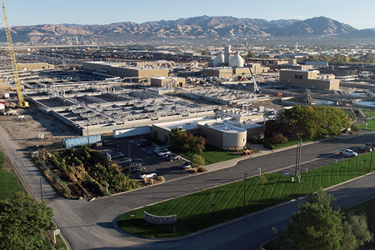
Wastewater utilities invest significant time and resources in capital projects intended to improve reliability, capacity, safety, and long-term performance. The design may be sound, the equipment may be new, and the project may appear ready for service. Yet the true test often comes during startup, when the assumptions developed during design meet actual field conditions.
At the Central Valley Water Reclamation Facility (CVWRF), a nuisance-tripping issue involving newly upgraded headworks equipment provided a practical example. Several bar screens and associated motor-driven systems experienced unexpected breaker trips during startup and early operation. The immediate concern was getting the equipment to run reliably. The larger lesson was how a wastewater utility moves from a completed engineering study to verified field settings, coordinated equipment programming, controlled startup, and accurate final records.
CVWRF previously documented the technical side of this issue, including the difference between locked-rotor current and the short, higher surge that can occur when a motor is first energized. That discussion helped explain why a motor can trip a protective device even when the equipment is not overloaded. The next question was broader: what project process is needed to make sure study recommendations, field settings, vendor programming, testing, and final documentation remain connected from design through operations?
A CVWRF Headworks Case Study
Headworks equipment operates at the front end of the treatment process and must handle changing flow, debris, and operating conditions. Screens, conveyors, compactors, and related systems may look like individual pieces of equipment, but they work as part of a continuous process. When one component repeatedly trips, the impact extends beyond the motor. Operators lose confidence in the system, startup work slows down, and project teams can spend considerable time determining whether the issue is electrical, mechanical, controls-related, or a combination of several factors.
In CVWRF’s case, the affected motors were experiencing high current during startup. A motor normally draws more current when it starts than when it is operating at a steady speed. The first-cycle surge can also be substantially higher than the value commonly used to describe locked-rotor current, particularly depending on the point in the voltage waveform when the motor is energized. Modern high-efficiency motors can make this issue more noticeable in some applications because their design characteristics may produce a higher initial surge.
The protective devices serving the affected equipment were reviewed along with the power-system coordination study. To reduce the nuisance trips, the magnetic breaker settings were raised above the levels implied by the original study. The equipment then operated with very infrequent nuisance tripping. From an operational standpoint, the immediate symptom improved.
But the field adjustment raised an important question: had the problem actually been resolved, or had the project only moved the trip threshold? A setting that improves operation must still be reviewed against the protection basis, manufacturer guidance, available fault current, coordination requirements, and final project documentation. Otherwise, the facility may solve the startup problem while creating uncertainty for future maintenance and troubleshooting.
The Bigger Lesson Was Not Just The Breaker
The most useful lesson from the CVWRF experience was to focus less on the individual setting and more on the sequence that produced it. Major wastewater projects involve many parties. A consulting engineer or specialist may prepare the power-system study. The engineer and owner review it. A testing firm verifies protective devices. Equipment suppliers configure intelligent motor-control components. VFD technicians enter drive parameters. Controls integrators configure alarms and interlocks. The contractor coordinates construction and startup, while the utility ultimately inherits the system and its records.
Each party may complete its assigned task, yet the final operating condition can still be unclear if the handoffs are not controlled. A study may recommend one value, the testing report may show another, a vendor may make an equipment-specific adjustment, and a field troubleshooting change may never make it back into the final study. The result is not always an immediate failure. More often, it is a long-term reliability gap that becomes visible when equipment trips, is replaced, or is evaluated during a future project.
For wastewater utilities, this is not only an electrical documentation issue. It is a project-delivery and asset-management issue. Final settings influence how equipment starts, alarms, trips, and recovers. They also affect how quickly operators and maintenance staff can understand an event and how accurately future studies represent the facility.
A Study-To-Startup Reliability Framework
Based on the CVWRF experience, the study-to-startup process can be organized into seven practical stages. The intent is not to add unnecessary paperwork. It is to create a clear path from design intent to the final approved operating condition.
1. Complete And Approve The Study Before Field Implementation
The power-system study should be prepared using the actual equipment, motor data, and system configuration whenever possible. Assumptions and open items should be clearly identified, and the study should be reviewed before its recommendations are released for field use. When construction schedules force a draft study to be used, the project should formally track that risk and identify how later revisions will be communicated.
2. Release One Controlled Settings Package
Once approved, the study and setting sheets should be issued as a controlled package to every party responsible for implementation. This includes the testing firm, contractor, equipment supplier, VFD vendor, commissioning team, engineer, and owner as applicable. A simple transmittal record can prevent field teams from using an outdated or preliminary version.
3. Implement And Verify Protective Settings
Protective-device settings should be entered and verified during acceptance testing. The records should identify what was found in the field and what was left after testing. If a recommended setting cannot be applied, does not match the installed device, or conflicts with actual equipment data, the issue should be logged for engineering review rather than resolved informally.
4. Coordinate Equipment-Specific Programming
Protective breakers are only one part of a modern motor-control system. Smart motor-control-center buckets, overload relays, VFDs, manufacturer protection functions, restart logic, and control-system interlocks may all affect equipment behavior. Utilities should make sure responsibility for each layer is assigned, and that vendor configuration reports are included in the project record.
5. Confirm Readiness Before Startup
Startup should validate a prepared system, not reveal for the first time that critical settings were never issued or verified. A short readiness check can confirm that the approved study is available, protective settings have been implemented, equipment programming records are complete, open discrepancies have assigned owners, and the commissioning team understands any remaining limitations.
6. Track Startup Issues And Field Changes
Startup will always reveal some field conditions that were difficult to predict during design. The goal is not to eliminate every adjustment. The goal is to manage each adjustment. A startup discrepancy log should record the equipment, event, setting or parameter changed, technical reason, approving party, date, and whether the final study or turnover record must be updated.
7. Reconcile The Final As-Commissioned Record
Before project closeout, the final study, testing reports, vendor records, and field settings should be reconciled. The final record should answer four simple questions: What was recommended? What was entered? What changed during startup? What is the final approved setting? A project involving coordinated settings should not close with different versions of the answer.
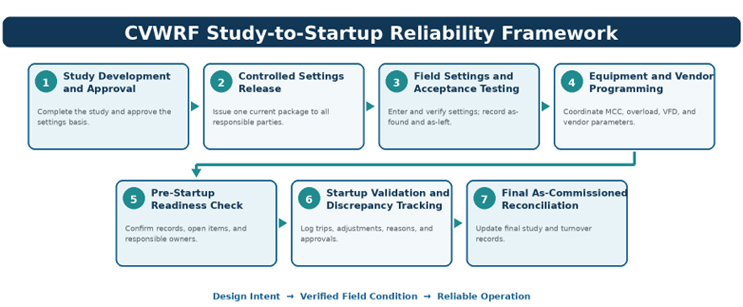
Figure 1. CVWRF study-to-startup reliability framework for wastewater projects
How The Framework Helps Other Utilities
The CVWRF case involved Headworks motors, but the framework applies more broadly across wastewater facilities. Similar issues can occur with influent pumps, blowers, mixers, solids-handling equipment, chemical systems, pump stations, and other motor-driven assets. The same principle also applies to controls, instrumentation, and intelligent devices whose final configuration may differ from the original design assumptions.
Utilities do not need a large new software platform to begin. A practical first step is to add a settings and configuration checkpoint to existing commissioning procedures. The utility can require one approved settings package, a clear responsibility matrix, as-found and as-left records, vendor parameter reports, a startup discrepancy log, and final reconciliation before closeout.
This approach also supports better collaboration between engineering, operations, maintenance, contractors, testing firms, and equipment suppliers. Operators bring practical knowledge about how equipment needs to function. Maintenance staff understand what information will be needed years later. Engineering teams can evaluate whether field changes remain consistent with the protection and design basis. When these groups are involved before startup rather than only after a problem occurs, the project is more likely to transition into reliable operation.
From Reactive Troubleshooting To Reliability Management
The immediate response to a nuisance trip will always be practical: determine what happened, restore the equipment, and protect the process. The CVWRF experience shows why the response should not stop there. A startup issue can be used to evaluate whether the project delivered a complete and traceable operating basis.
At CVWRF, the trip event began as a motor-protection question. It ultimately reinforced a broader reliability principle: studies, settings, testing, vendor programming, startup observations, and final records are not separate project tasks. They are connected stages of one implementation process.
For other wastewater utilities, the value of this lesson is not in copying one breaker setting or one troubleshooting action. It is in adopting a disciplined order of work, completing and approving the study, releasing the correct information, assigning responsibilities, verifying the field condition, managing startup changes, and reconciling the final record.
The Path Forward
Wastewater utilities are continuing to modernize their facilities with intelligent motor-control centers, advanced VFDs, connected instruments, power monitoring, SCADA upgrades, and other configurable systems. These technologies provide more information and flexibility, but they also increase the importance of disciplined project handoffs.
The CVWRF case demonstrates that reliability is not created only through equipment selection or study completion. It is created through the full path from study to startup and, finally, to an accurate as-commissioned record. When that path is controlled, utilities can reduce rework, improve operator confidence, shorten troubleshooting, and leave future staff with documentation that reflects how the facility actually operates.
A nuisance trip may appear to be a small startup problem. In the right context, it can also be a useful signal. It can show a utility where design intent, field implementation, and operations need to be connected more clearly. Closing that gap is one of the most practical ways wastewater utilities can strengthen long-term reliability.
Navneet Prasad, PE, is an Electrical Controls Engineer at CVWRF focused on electrical systems, controls, reliability, and digital transformation.