
Finding The Project Before The Bid: A Better Workflow For Monitoring Local Water Infrastructure Opportunities
By Matthew Howell
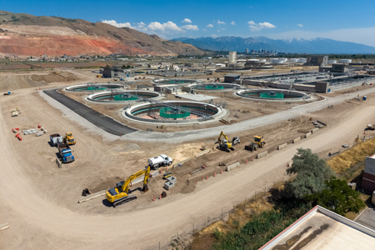
For contractors, estimators, suppliers, and service firms working around public water and wastewater infrastructure, the first time a project becomes visible should not be the day a bid package lands in an inbox.
By then, the clock is already running.
Public infrastructure projects usually leave a trail long before formal procurement begins. A utility discusses a treatment-plant improvement. A city council approves engineering work. A capital improvement plan identifies a future sewer extension. A funding agency announces a loan or grant. A board packet mentions design progress, easement work or a preliminary schedule. None of those items is a bid opportunity by itself, but together they can reveal where future work is developing.
The challenge is that these signals are scattered across hundreds of places and published in different formats. A practical discovery process therefore needs to do more than collect announcements. It must separate early signals from bid-ready work, verify the source, qualify the opportunity, and keep the information current.
The Problem Is Fragmentation
Public water and wastewater work is unusually fragmented from a discovery standpoint.
A single future project may appear across a city website, utility board minutes, engineering-agreement approvals, state funding lists, environmental notices, procurement portals, and local meeting agendas before a formal solicitation is issued. Different agencies also use different terminology. One municipality may call a project a water-main replacement, another may call it distribution-system rehabilitation, and another may bury it inside a broader capital program.
That fragmentation creates two problems.
First, good projects can be missed because no single source provides a complete picture.
Second, teams can waste time on items that look promising but are too early, too old, outside their geography, or irrelevant to their actual scope.
The answer is not simply “find more leads.” It is to build a repeatable workflow for turning scattered public information into qualified opportunities.
Start By Recognizing Early-Stage Signals
The earliest useful signals are often planning and funding events rather than solicitations.
Examples include:
- capital improvement plans that name water or wastewater work
- council or utility-board approval of engineering or design contracts
- preliminary engineering reports
- state revolving fund (SRF) or other public-funding activity
- environmental review or public-notice activity
- easement acquisition or right-of-way work
- bond measures or financing approvals
- design milestones discussed in public meetings
- construction-manager or engineering-firm selections
- agency budget documents that allocate money to a named project
These signals are valuable because they can provide time to understand the project before procurement begins.
They are also easy to misread.
A project can be funded but still be years from construction. A board may approve engineering work without approving construction. A project can appear in a capital plan and later be delayed, rescoped, or removed. Early discovery is useful only when stage is recorded honestly.
Separate “Signal” From “Opportunity”
One of the most important disciplines is distinguishing project awareness from bid readiness.
A useful classification might look like this:
Planning: The need or project concept is publicly identified, but scope, schedule, or funding may still be developing.
Design/Funding: Engineering, environmental review, financing, or other preconstruction work is underway.
Procurement approaching: Public documents indicate bidding, contractor selection, or release of construction documents is expected soon.
Active solicitation: An official invitation for bid, request for proposal, or other procurement is open.
Awarded/Construction: The work has been awarded or construction activity is underway.
This simple distinction prevents teams from treating every project mention as if a bid is immediately available.
It also supports different business-development strategies. A contractor may want to watch a project in design for future estimating, while a supplier may care most about awarded projects and the contractors attached to them.
Verify Against The Official Source
A discovery system should point toward the original public record, not replace it.
Before an estimator commits time, the key details should be checked against the responsible public entity or official procurement source.
At minimum, verify:
- project owner
- location
- current stage
- scope
- solicitation number, if one exists
- bid or proposal deadline
- pre-bid meeting requirements
- addenda
- plan and specification location
- contact information published by the agency
- whether the opportunity is still active
This matters because public-project information changes quickly.
Deadlines move. Addenda alter scope. A project discussed in a meeting may not proceed on the expected schedule. A secondary listing can be useful for discovery, but the official source should control the final go/no-go decision.
Qualify Before Estimating
Finding a public project does not mean it deserves estimating time.
A practical qualification pass can be short. Ask five questions:
- Is it in our geography?
- Does the scope match our trade, equipment and capabilities?
- Is the project at a stage where action makes sense now?
- Is there enough time to prepare a serious response?
- Is the opportunity still current and supported by an official source?
For water and wastewater work, trade-specific filtering is especially important. The same project may contain civil, excavation, concrete, mechanical, electrical, controls, process equipment, piping, roofing, or general-building scopes. A broad project title can hide highly relevant subcontracting opportunities.
Good qualification narrows the field before expensive estimating hours are spent.
Treat Freshness As A Project Attribute
Deadlines receive the most attention, but freshness matters earlier than the deadline.
Every project record should have a “last verified” date or equivalent status marker.
A two-month-old planning signal is not necessarily useless, but it should not be presented as current without a recheck. Likewise, a solicitation that was active yesterday may be stale today if an award notice has been issued or the owner has postponed the procurement.
For teams maintaining an opportunity list, this creates a simple rule: Old information should trigger verification, not confidence.
A Practical Find → Verify → Qualify → Track Workflow
The entire process can be reduced to four steps.
Find: Monitor the public sources where early and active project information appears.
Verify: Open the responsible agency’s original record and confirm the facts.
Qualify: Filter by geography, trade fit, project stage, deadline, and business value.
Track: Record the project, official link, stage, deadline, and last-verified date, then recheck it as the project develops.
The power of the workflow is not any single source. It is consistency.
A smaller contractor that follows ten dependable public sources every week can often make better decisions than a larger team that collects hundreds of unverified leads. The goal is not to create the longest opportunity list. It is to create a short list that is current, relevant, and actionable.
The Advantage Of Seeing The Project Earlier
Bid day will always matter, but procurement should not be the first point of awareness.
When firms identify public water and wastewater projects earlier, they gain time to understand the owner, project stage, likely scope, engineering team, funding path, and probable timeline. That context can improve the decision about whether the project deserves attention once the procurement window opens.
The best opportunity-monitoring process therefore does two things at once: it looks backward to authoritative public records and forward to the next likely project milestone.
That is what turns scattered municipal and utility information into usable business intelligence.
Matthew Howell is the founder of Howell Commerce Co. and creator of Howell Opportunity Radar, a Missouri-focused construction-opportunity discovery platform.