
Filtration Media For Municipal, Industrial, And Landscape Water Treatment: Legacy And Novel Technologies
By Chris Phillips
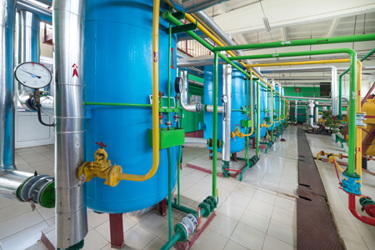
The growing demand for water across a variety of sectors combined with the increasingly understood complexity of emerging contaminants is creating a dynamic marketplace for filtration media.
Water treatment systems face significant regulatory pressure to control turbidity, total suspended solids, particulate metals, and emerging micro-pollutants; meanwhile, much of the world’s water infrastructure is aging, driving demand for treatment solutions that can be adapted, upgraded, or expanded without full-system replacement. The growth of water reuse, stormwater capture, and decentralized treatment further amplifies the need for reliable filtration at varying flows and water qualities. In this environment, the goal of selecting the right filtration media is not to meet minimum standards but to achieve the right balance of performance, durability, and operational simplicity to ensure long-term compliance and cost-effective operation.
As filter media technology science evolves to remove suspended solids and dissolved compounds across municipal utilities, highly complex industrial processes, agricultural irrigation, and landscape systems, legacy media continue to prove their worth while making room for innovative media and advanced systems.
Time-Tested Titans: Sand, Multimedia, And Carbon
Traditional filtration media remain the workhorses of the media landscape. Mimicking the function of how rainwater is naturally filtered into an aquifer, old technology still works well most of the time and to a point. These media include sand filtration, multi-media filtration, and activated carbon.
Sand filtration is a simple way to clean water by passing it slowly through a bed of silica sand. As water flows downward, suspended particles of 20 microns or larger like dirt, silt, and organic matter are physically trapped in the tiny spaces between sand grains, while some contaminants stick to the sand or are broken down by naturally occurring microorganisms on the surface of the media. The filter is cleaned by backwashing, which flushes the trapped material out. Sand filtration is commonly used for stormwater treatment, drinking water pretreatment, irrigation systems, and industrial process water, providing basic, reliable, and low-cost removal of certain solids.
Multimedia filtration works on the same basic principle as sand filtration but can trap solids as small as 5 microns by using several layers of different media (often anthracite, coarse garnet & fine garnet) stacked by size, density, and specific gravity to improve performance. As water flows through the filter, larger particles are captured in the upper, coarser layers while smaller particles are trapped deeper in the finer media, allowing the filter to hold more solids and remove a wider range of contaminants before it needs cleaning. Like sand filters, multimedia filters are periodically backwashed to remove accumulated debris. They are commonly used in municipal and industrial water treatment, pretreatment for membranes and advanced processes, cooling towers, and applications where higher flow rates and better solids removal are needed than a single-layer sand filter can provide.
Rather than straining suspended solids in the way that sand and multi-media filters do, activated carbon works by adsorbing dissolved contaminants like chlorine and other disinfectant residuals, organic chemicals, tastes and odors, halogenated organic compounds, hydrocarbons, and other highly dispersed contaminants. Activated carbon particles have an extremely large internal surface area filled with microscopic pores that enable adsorption, which attracts the dissolved compounds and affixes them to the surface of the carbon. Both granulated and powdered activated carbon filters are commonly used in drinking water treatment, industrial process water, food and beverage production, and pretreatment for membranes, where they improve water quality by removing compounds that could damage downstream equipment, interfere with sensitive processes, or result in water that is unpleasant or unsafe to drink. Activated carbon cannot be cleaned by backwashing in the way sand and multimedia filters are. Instead, once its adsorption capacity is used up, the carbon is typically replaced or sent off-site for thermal regeneration, where high heat drives off the captured contaminants and restores much of its adsorptive capacity.
The New Wave: Game-Changing Media
Innovations in media design are solving the more complex challenges of modern water treatment and responding to the growing sophistication of industrial processes and need for higher-purity water.
Engineered media and coated substrates are advanced filtration materials designed with tailored chemical or catalytic coatings on stable base media like sand, anthracite, or polymer beads to target specific contaminants that conventional media cannot efficiently remove. These coatings enable precise removal of metals, PFAS precursors, nutrients, and trace organics, providing water treatment systems with solutions that meet the needs of sophisticated applications and increasingly stringent regulatory demands.
Glass media and recycled alternatives deliver high performance and sustainability advantages. Made from recycled glass or other repurposed materials, these media offer long service life and natural resistance to biofouling, helping maintain consistent filtration performance with lower maintenance. By using recycled materials, they also offer environmental benefits, reducing demand for virgin resources and diverting waste from landfills. These media are gaining market share especially in municipal and industrial systems for stormwater and reuse applications.
High surface area and specialty media are designed with advanced structures to maximize contact between water and the media’s active surfaces. Typically using ceramic media, sintered materials, and expanded surface geometries, these designs enable higher capture efficiency for fine particles and improved biofilm control, making them ideal for applications where precision and reliability are critical. They are commonly used in high-purity industrial applications, including semiconductor and electronics manufacturing, pharmaceutical and biotech production, food and beverage processing, laboratory water systems, and boiler or cooling water in power generation, where even trace contaminants can impact processes, equipment, or product quality.
Beyond Media: Innovations In Filter Systems
Modern filtration systems are increasingly defined not just by the media they contain but by how they operate. Automatic backwashing systems conserve water and maintain consistent filtration performance by automatically cleaning the media at the right intervals, while advances in hydraulic design and control systems reduce maintenance demands and ensure reliable operation in both industrial and municipal settings.
Enhanced flow distribution and vessel design — including improved and removable underdrains, distribution plates, and optimized tank geometry — minimize channeling, extend media lifespan, and lower operational costs. Integration with monitoring and smart controls, such as turbidity sensors, differential pressure measurement, and automation logic, allows systems to respond dynamically to variable loads, operate more efficiently, and provide operators with real-time insight into performance.
Together, these operational innovations complement advanced media to deliver higher reliability, efficiency, and lower total cost of ownership.
The Future Of Filtration Media And Systems
Increasingly, advanced filtration media is being incorporated into decentralized and on-site treatment solutions, enabling communities and industries to manage water locally without a loss of performance. Advances in AI and real-time optimization are allowing systems to adjust filtration cycles automatically, improving efficiency, conserving water, and extending media life.
The industry also is seeing a shift toward modular, scalable designs that can handle a wide range of water qualities and flow rates, making advanced treatment more accessible across diverse applications. Research is driving the development of next-generation adsorptive and catalytic media, offering enhanced removal of emerging contaminants and supporting regulatory compliance for increasingly complex water challenges and sophisticated processes.
Legacy Strength Meets Next-Generation Innovation In Water Filtration
Filtration media remains a cornerstone of water treatment, combining the proven reliability of traditional media with the enhancements of modern innovations. Advances in media design, system engineering, and automation are expanding what’s possible across municipal, industrial, and landscape applications, increasing efficiency, performance, and adaptability. By blending time-tested approaches with novel technologies, water treatment systems are better equipped to meet increasing regulatory, economic, and environmental pressures, ensuring cleaner, safer water and more resilient infrastructure for years to come.
 Chris Phillips is President of Yardney Water Filtration Systems.