
Everything You Need To Know About Optimizing UV-AOP Systems
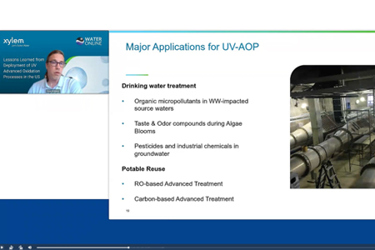
As water scarcity intensifies and potable reuse becomes an increasingly important part of municipal water planning, ultraviolet advanced oxidation processes (UV-AOP) are emerging as a critical treatment barrier for destroying trace organic contaminants and pathogens. However, achieving reliable removal requires more than selecting the right UV reactor. System performance depends on understanding the photochemical reactions that drive contaminant destruction, the characteristics of target compounds, and the influence of water quality on radical generation and consumption. Utilities must also consider oxidant selection, with hydrogen peroxide and free chlorine offering different advantages in terms of treatment efficiency and operating costs. These factors influence how UV-AOP systems are designed for applications ranging from groundwater treatment to indirect and direct potable reuse. Beyond the chemistry, hydraulic conditions, real-time monitoring, and regulatory validation introduce additional engineering challenges. Lessons from full-scale installations offer insight into addressing these complexities, while emerging testing approaches and system design tools are opening new possibilities for optimizing performance.
Get unlimited access to:


Enter your credentials below to log in. Not yet a member of Water Online? Subscribe today.