
Evaporative Condenser Water Saver Market To Reach US$2.73 Billion By 2033
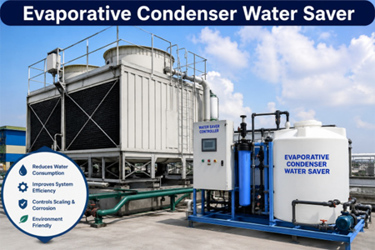
According to our Growth Market Report, the global evaporative condenser water saver market size in 2025 was valued at USD 1.37 billion. The market is experiencing robust expansion, with a CAGR of 7.9% forecasted from 2026 to 2034. By the end of 2034, the market is expected to reach approximately USD 2.73 billion, driven by increasing environmental regulations, a heightened focus on water conservation, and the rapid adoption of advanced water-saving technologies in commercial and industrial sectors. As per our in-depth analysis, the market's growth is underpinned by a combination of regulatory mandates, technological advancements, and rising awareness about sustainable resource management across every major geography.
Why the Evaporative Condenser Water Saver Market Is Becoming a Global Priority
Water has become one of the world's most valuable industrial resources. As industries expand and climate patterns continue to challenge freshwater availability, businesses are searching for technologies that reduce water consumption without compromising cooling efficiency. This growing need has accelerated the development of the evaporative condenser water saver market, where innovative water-saving solutions are transforming refrigeration and cooling operations across industries.
Evaporative condensers are widely used in cold storage facilities, food processing plants, chemical manufacturing, pharmaceuticals, HVAC systems, breweries, and industrial refrigeration networks. While these systems are highly energy efficient, they traditionally consume significant amounts of water through evaporation, drift, and blowdown. Water saver technologies are changing this equation by enabling industries to recycle, optimize, and intelligently manage water usage.
Rather than simply reducing operational costs, these solutions are becoming strategic investments that improve environmental performance, strengthen sustainability initiatives, and support compliance with evolving global water conservation regulations.
What Is an Evaporative Condenser Water Saver?
An evaporative condenser water saver refers to a collection of technologies, intelligent control systems, filtration equipment, water treatment solutions, and monitoring devices designed to reduce water consumption in evaporative cooling systems.
These solutions help industries:
- Optimize cooling cycles
- Reduce blowdown water losses
- Improve water quality
- Increase cycles of concentration
- Recover reusable water
- Minimize scaling and corrosion
- Enhance equipment lifespan
- Lower operating expenses
Instead of replacing existing condensers, many water-saving systems integrate with current infrastructure, making modernization both practical and cost-effective.
Why Is the Market Growing So Rapidly?
The market is expanding because industries are realizing that water efficiency directly impacts profitability, environmental responsibility, and long-term operational resilience.
Several factors are driving this momentum:
Rising Water Scarcity
Many industrial regions are experiencing water shortages, forcing organizations to adopt technologies that maximize every drop of available water.
Increasing Environmental Regulations
Governments are introducing stricter policies regarding industrial water discharge, wastewater management, and freshwater extraction. Water-saving systems help businesses meet compliance requirements while reducing environmental impact.
Sustainability Commitments
Large corporations are setting ambitious Environmental, Social, and Governance (ESG) goals. Water conservation has become a measurable sustainability metric, making evaporative condenser water savers an attractive investment.
Higher Utility Costs
Water procurement, treatment, and disposal expenses continue to rise in many countries. Reducing consumption directly lowers operational costs and improves financial performance.
Smart Industrial Infrastructure
Digital monitoring, automation, and Industrial Internet of Things (IIoT) technologies allow facilities to optimize water use in real time, improving efficiency without sacrificing cooling performance
Key Technologies Transforming the Market
Innovation is reshaping how evaporative condensers manage water.
Intelligent Water Monitoring
Advanced sensors continuously monitor conductivity, pH, temperature, dissolved solids, and water quality, allowing automatic adjustments that reduce unnecessary water discharge.
Automated Blowdown Optimization
Instead of using fixed schedules, modern systems determine the precise moment when blowdown is necessary, significantly reducing wasted water.
High-Efficiency Filtration Systems
Advanced filtration removes suspended solids and contaminants, allowing water to remain in circulation for longer periods.
Water Recovery Systems
Some facilities now recover rainwater, condensate, or treated wastewater for condenser operation, reducing dependence on freshwater supplies.
Predictive Maintenance Software
Artificial intelligence analyzes operational patterns to detect scaling, fouling, and performance degradation before efficiency declines.
Applications Across Multiple Industries
The versatility of evaporative condenser water-saving technologies supports a wide range of industrial sectors.
Food and Beverage Processing
Food manufacturers require reliable refrigeration while maintaining strict hygiene standards. Water-saving technologies reduce operational costs without affecting production efficiency.
Cold Storage Facilities
Cold storage warehouses operate cooling systems continuously. Even small reductions in water usage translate into significant annual savings.
Pharmaceutical Manufacturing
Temperature-controlled production environments benefit from stable cooling systems that optimize both water and energy efficiency.
Chemical Processing
Chemical facilities depend on reliable heat rejection systems. Intelligent water management improves equipment reliability while minimizing wastewater generation.
Data Centers
As digital infrastructure expands worldwide, hybrid cooling systems incorporating evaporative technologies increasingly require efficient water management strategies.
Commercial HVAC Systems
Large commercial buildings, hospitals, airports, and shopping complexes are integrating advanced water-saving controls into centralized cooling systems.
Emerging Trends Shaping the Future
The industry is evolving beyond simple water conservation toward intelligent resource management.
Major trends include:
- AI-driven cooling optimization
- Cloud-based water analytics
- Digital twin technology
- Automated sustainability reporting
- Zero-liquid-discharge integration
- Hybrid cooling systems
- Smart water treatment chemicals
- Remote performance monitoring
- Predictive equipment diagnostics
- Carbon-neutral industrial cooling strategies
These innovations enable facilities to improve both environmental and financial performance simultaneously.
Benefits Driving Adoption
Organizations adopting evaporative condenser water savers experience benefits that extend well beyond water conservation.
Operational Benefits
- Lower water consumption
- Reduced utility expenses
- Improved cooling efficiency
- Longer equipment lifespan
- Reduced maintenance requirements
- Better operational reliability
Environmental Benefits
- Lower freshwater withdrawal
- Reduced wastewater discharge
- Smaller environmental footprint
- Improved sustainability reporting
- Support for ESG initiatives
Business Benefits
- Faster return on investment
- Reduced regulatory risks
- Improved corporate reputation
- Increased operational resilience
- Better resource planning
Challenges Facing the Market
Despite its strong outlook, several factors influence adoption.
Initial Investment
Although long-term savings are substantial, upfront installation costs may delay implementation for smaller facilities.
Integration Complexity
Retrofitting older condenser systems may require engineering modifications to maximize efficiency.
Water Quality Variability
Different regions have varying water chemistry, requiring customized treatment strategies for optimal performance.
Skilled Workforce Requirements
Advanced monitoring and automation systems require trained personnel for operation and maintenance.
Competitive Landscape
- Baltimore Aircoil Company (BAC)
- Evapco Inc.
- SPX Cooling Technologies
- Johnson Controls
- Kelvion Holding GmbH
- Daikin Industries Ltd.
- Mitsubishi Electric Corporation
- Ebara Corporation
- Shuangliang Eco-Energy Systems Co. Ltd.
- Hamon Group
- Paharpur Cooling Towers Ltd.
- Thermax Limited
- Brentwood Industries
- Enexio Water Technologies
- Mesan Group
- GEA Group AG
- Evaptech Inc.
- Guangzhou Heng An Machinery Co. Ltd.
Future Opportunities in the Global Market
According to our Growth Market Report, the future of the evaporative condenser water saver market lies in the convergence of digital intelligence, sustainable engineering, and industrial automation. As industries embrace smart manufacturing and resource-efficient operations, water-saving technologies will evolve from optional upgrades to core components of modern cooling infrastructure.
Future innovations are likely to focus on self-optimizing cooling systems capable of learning operational patterns, predicting maintenance needs, and automatically balancing water use with energy efficiency. Integration with renewable energy, advanced analytics, and enterprise sustainability platforms will further strengthen the value proposition for industrial users.
Organizations that invest early in intelligent water management solutions will be better positioned to navigate tightening regulations, rising utility costs, and increasing stakeholder expectations for responsible resource management.
Report: https://growthmarketreports.com/report/evaporative-condenser-water-saver-market
Source: Growth Market Reports