
Denver Board of Water Commissioners Declares Stage 1 Drought, Implements Mandatory Watering Restrictions
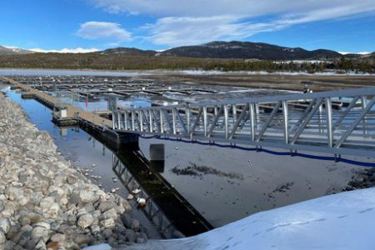
Declaration seeks 20% reduction in water use; officials stress keeping automatic systems off until mid- to late-May.
By TAP Staff
Denver Water’s collection and service areas continue to face severe drought conditions, with historically low snowpack. As a result, at its meeting today, the Denver Board of Water Commissioners adopted a resolution declaring a Stage 1 drought.
“A tremendous amount of thought and care went into this declaration, and it is the right decision for our organization and for our community,” said Tyrone Gant, president of the Denver Board of Water Commissioners. “This is not our first drought, and we will get through this challenging time, but we need everyone to help out this summer in case drought conditions persist into next year and beyond.”
Alan Salazar, CEO/manager of Denver Water said: “Denver Water depends on mountain snowpack for its water supply, and this winter was unusually warm and did not deliver the snow we need. This drought is also a reminder of the impacts of climate change on our water supply. The good news is that our customers have done a remarkable job reducing water use over the last several decades. So please use only what you need and help save water indoors and outdoors.”
While the declaration seeking a 20% reduction in water use is effective immediately, there is no need to turn on automatic systems until at least mid- to late-May. It is not necessary to water grass two days a week in April and the beginning of May, which will help save water. Occasional hand-watering may be necessary for trees and shrubs during this time.
This summer, customers in single-family residential properties may water no more than two days per week and must follow a set schedule:
- Addresses ending in even numbers: Sunday and Thursday.
- Addresses ending in odd numbers: Wednesday and Saturday.
All other customers, including multifamily properties, commercial properties, homeowners associations and government properties, may water only on Tuesdays and Fridays.
In addition, customers must follow Denver Water’s annual summer watering rules:
- Water only during cooler times of the day, between 6 p.m. and 10 a.m.
- Do not allow water to pool in gutters, streets and alleys.
- Do not waste water by letting it spray on concrete and asphalt.
- Repair leaking sprinkler systems within 10 days.
- Do not irrigate while it is raining or during high winds.
- Use a hose nozzle with a shut-off valve when washing your car.
As of March 23, 2026, Denver Water’s reservoir storage stood at 80% full. Average for this time of year is 85% full.
Also as of March 23, Snowpack levels, which indicate how much water Denver Water can expect to melt and enter reservoirs this spring, continue to be among the worst on record in Denver Water’s two primary watersheds, the Colorado River Basin (55% of normal, worst on record) and the South Platte River Basin (42% of normal, worst on record).
“The snowpack within Denver Water’s collection system has deteriorated significantly and continues to decline,” said Nathan Elder, Denver Water’s manager of water supply. “Snowpack levels in both basins are now the lowest observed in the past 40 years, with accelerated melting underway. The conditions we are experiencing are unprecedented, and we need customers to save water to protect the supply we have right now.”
While April is historically one of the snowiest months of the year in Colorado, recovering to a normal spring snowpack peak would require the snowiest April in recorded history, by a wide margin.
“We’re 7 to 8 feet of snow short of where we need to be,” said Elder. “It would take a tremendous amount of snow to recover at this point, so it’s time to turn our attention to preserving what we have.”
The board established a goal to reduce water use by 20% this year, which will help preserve reservoir storage going into 2027 and help maintain the health, safety and economic vitality of the community to the extent possible.
This year marks the fifth time since 2000 that Denver Water has issued a Stage 1 drought, and the first since 2013. Prior to 2013, the board declared a Stage 1 drought in 2002, 2003 and 2004.
Denver Water is developing plans for enforcement of watering restrictions, along with proposed temporary drought pricing that would place a premium on higher-volume outdoor water use, while keeping the cost per gallon for essential indoor water use, such as for drinking, cooking and bathing, unchanged. Information about drought pricing and enforcement will be shared in the coming weeks.
“Now is a good time for folks to consider making landscape changes with plants and grasses that require far less water and are better able to adapt to Colorado’s dry stretches,” said Salazar.
Denver Water has many resources for homeowners looking for inspiration and information about landscapes that fit naturally into Colorado’s dry climate, including rebates for turf removal and a DIY guide for landscape changes.
Customers can do their part by making water-efficient upgrades inside and outside the home by taking advantage of rebates on certain high-efficiency toilets and sprinkler heads. Customers also can report water waste online.
Additional information on Denver Water’s approach to drought response can be found here, and updates about Denver Water’s reservoir levels, customer water use and snowpack can be found in the Water Watch Report and this TAP story (also available in Spanish), which provide the most up-to-date information.