
Commercial Wastewater Treatment Relies On Advanced Decentralized Solutions
By Dennis F. Hallahan, PE
Commercial Facilities Require Smarter Wastewater Solutions
Decentralized advanced wastewater treatment has become an increasingly effective solution for a wide range of commercial facilities, including schools, restaurants, convenience stores, campgrounds, hotels, and recreational facilities. These projects frequently present some of the industry's most complex treatment challenges, from high-strength wastewater and nutrient removal requirements to seasonal occupancy, intermittent peak flows, limited site space, and increasingly stringent discharge regulations.
Fortunately, significant advances in decentralized treatment technology have transformed the options available to engineers and facility owners. Modern advanced treatment systems provide highly effective, customizable, and cost-efficient solutions that can be tailored to the unique operating characteristics of each commercial site while meeting demanding environmental performance standards.
Every Commercial Facility Is Different
One of the biggest challenges in commercial wastewater design is that no two facilities generate identical wastewater — even within the same industry.
Restaurants provide a perfect example. A fine dining establishment using china and full-service kitchens produces wastewater with very different characteristics than a fast-food restaurant using disposable service ware. Even cuisine type influences wastewater strength, with Italian, Mexican, Chinese, and other restaurants generating noticeably different organic loading.
The same variability exists in other commercial sectors. One convenience store may prepare fresh food throughout the day, while another simply reheats prepackaged meals. Campgrounds range from primitive public facilities with minimal amenities to full-service RV resorts offering restaurants, retail stores, water parks, and dump stations.
Unfortunately, permitting regulations often categorize facilities only by broad use type rather than by the actual wastewater they produce. As a result, designers must look beyond code tables and understand the specific characteristics of each project.
Design Tip #1: Know The Wastewater
Successful decentralized system design begins with understanding the wastewater.
Whenever possible, engineers should collect multiple wastewater samples over different days and seasons to accurately characterize both flow and strength. Existing facilities provide valuable opportunities for sampling, while proposed facilities require designers to rely on research, comparable installations, and anticipated operational patterns.
The more accurately wastewater characteristics are defined during design, the greater the likelihood of meeting permit limits, optimizing equipment sizing, reducing construction costs, and simplifying long-term operation and maintenance.
Good data produces better designs.
Design Tip #2: Avoid The "Factor of Safety" Trap
When engineers face uncertainty, the instinct is often to apply a generous factor of safety. While this approach works well in structural engineering, it can create significant problems in biological wastewater treatment.
Unlike a bridge beam that simply becomes stronger when oversized, biological treatment systems depend on carefully balanced microbial processes. In wastewater treatment, bigger is not always better.
Oversized tanks, blowers, and aeration equipment can disrupt those biological systems. Excessive aeration creates unnecessary turbulence that breaks apart bacterial flocs into fine pin floc and encourages filamentous bacteria growth. The result is poor settling, elevated effluent turbidity, increased energy consumption, and a treatment system that becomes difficult for operators to stabilize.
Careful characterization of wastewater allows equipment to be properly sized, resulting in improved treatment performance, lower operating costs, and fewer operational challenges throughout the life of the system.
Modern Decentralized Technologies Meet Today's Regulatory Demands
The same biological treatment technologies used in large municipal wastewater plants are now available in compact, decentralized systems suitable for commercial facilities and even individual residences.
These technologies provide engineers with the flexibility needed to comply with increasingly stringent nutrient removal and discharge requirements, particularly in environmentally sensitive watersheds where centralized sewer expansion is prohibitively expensive or simply not feasible.
Today's decentralized treatment options include:
- Suspended-growth systems, including activated sludge and sequencing batch reactors (SBRs)
- Fixed-film technologies such as moving bed biofilm reactors (MBBRs), attached-growth systems, and trickling filters
- Membrane bioreactors (MBRs)
- Packed-bed and media filter systems
Many of these systems are modular, factory-built, and easily expandable as facilities grow. Their flexibility allows engineers to accommodate changing wastewater flows while maintaining reliable treatment performance.
In addition, advances in remote monitoring, automation, and energy-efficient equipment are helping owners reduce operating costs while improving long-term system reliability.
Advanced Treatment In Action
The View Campground – Monument Valley, Arizona
Campgrounds and RV parks often experience dramatic seasonal fluctuations in wastewater flow while also generating relatively high-strength wastewater.
When the Navajo Nation sought to expand The View Campground in Monument Valley to include additional campsites, cabins, and RV accommodations, its existing wastewater system could no longer support the increased demand from the additional facilities.
Engineers specified four AdvanTex® AX-Max treatment units to provide approximately 20,000 gallons per day of treatment capacity, with the ability to add additional units as future growth occurs.
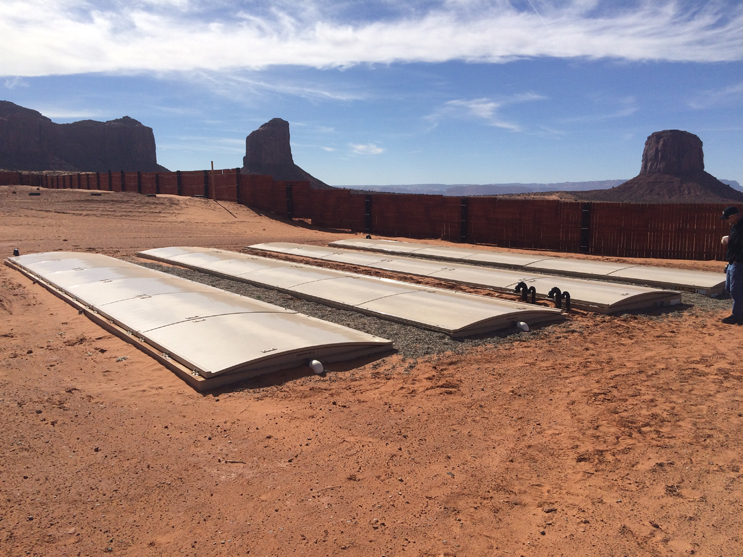
Each prefabricated treatment module incorporates pumping, ventilation, recirculation, and engineered textile media within a compact fiberglass tank. The modular system replaced the underperforming treatment plant while supporting expansion of one of Arizona's premier tourism destinations.
University of Wyoming-National Park Service Research Station – Grand Teton National Park
Protecting sensitive environmental resources was the driving force behind the wastewater system upgrade at the University of Wyoming-National Park Service Research Station at historic AMK Ranch.
Located adjacent to Jackson Lake within the Greater Yellowstone Ecosystem, the facility serves scientists, students, and park personnel whose occupancy varies throughout the year.
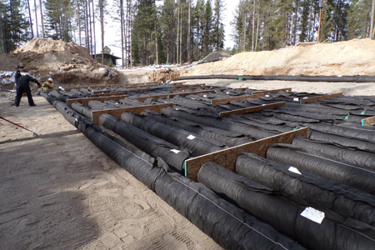
The project utilized a 6,500-gallon-per-day Advanced Enviro-Septic® (AES) passive treatment system from Infiltrator Water Technologies. Because the system operates without energy-intensive mechanical treatment equipment, it provides reliable wastewater treatment while minimizing maintenance requirements and protecting one of the nation's most environmentally sensitive landscapes.
Looking Ahead
As environmental regulations continue to tighten and infrastructure costs rise, decentralized advanced treatment systems are becoming an increasingly attractive option for commercial wastewater management.
Modern technologies including suspended-growth systems, fixed-film processes, membrane bioreactors, textile filters, and modular packaged plants allow engineers to design highly customized solutions that address site-specific hydraulic loading, organic strength, nutrient removal, lifecycle costs, and long-term operational reliability.
At the same time, the integration of smart controls, remote monitoring, and automation is making decentralized systems easier to manage while reducing operating costs.
For many commercial facilities, decentralized treatment is no longer viewed as an alternative to centralized infrastructure. It is becoming the preferred solution for delivering reliable, sustainable wastewater treatment where and when it is needed.
Dennis F. Hallahan (dhallahan@infiltratorwater.com), PE, is technical director for Infiltrator Water Technologies. With more than 38 years of experience designing and constructing decentralized wastewater treatment systems, Hallahan is a nationally recognized educator and speaker on onsite wastewater treatment technologies. He has authored numerous technical articles, presents regularly at industry conferences, and serves on several national wastewater industry committees.