
Carollo Engineers/CDM Smith Selected To Design Major PFAS Treatment Upgrades For Broward County, Florida
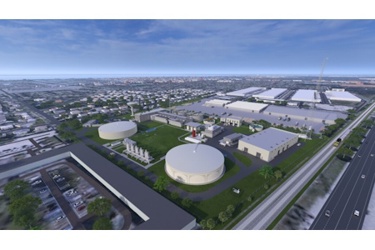
Advanced water treatment and transmission infrastructure to meet EPA’s proposed 2031 PFAS compliance deadline
Carollo Engineers, in association with CDM Smith, has been selected by Broward County to design comprehensive water treatment and transmission infrastructure upgrades to address Per- and Polyfluoroalkyl Substances (PFAS) in the County’s groundwater supplies. The multi-faceted project will enable compliance with the EPA’s National Primary Drinking Water Regulation (NPDWR) for PFAS ahead of the proposed April 2031 compliance date.
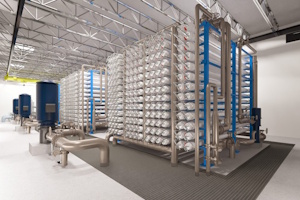
Representing one of Florida’s largest PFAS treatment initiatives to date, the project includes installation of state-of-the-art nanofiltration treatment systems as well as approximately six miles of large-diameter potable water transmission main to enhance system redundancy and reliability across the service area.
Carollo Principal in Charge Elizabeth Fujikawa commended Broward County’s forward-thinking approach:
“We applaud Broward County for taking decisive action to address PFAS ahead of the EPA deadline. By implementing state-of-the-art nanofiltration systems, the County demonstrates an unwavering commitment to safe drinking water while building resilient infrastructure designed to meet both current and future regulatory requirements.”
Constructed in 1960, Water Treatment Plant (WTP) 1A in Lauderdale Lakes currently operates with a rated capacity of 16 million gallons per day (MGD). Constructed in 1975, WTP 2A in Pompano Beach maintains a rated capacity of 30 MGD. Both plants currently utilize conventional lime softening with dual media filtration and obtain raw water from Biscayne Aquifer wells. The plants will remain fully operational throughout the construction process to maintain uninterrupted, reliable service.
The project will deliver advanced treatment capabilities through:
- Installation of state-of-the-art nanofiltration and ancillary systems designed to remove PFAS.
- Nanofiltration membrane systems designed for future conversion to reverse osmosis systems if needed.
- Upgrades to Supervisory Control and Data Acquisition (SCADA) systems for enhanced monitoring and control.
- Approximately six miles of large-diameter potable water transmission main to enhance system redundancy and reliability.
The new transmission main will interconnect the two plants and provide increased redundancy across the District 1A and 2A service areas. This infrastructure is designed to avoid interruption to the delivery of safe, high-quality drinking water to the served communities.
The Carollo/CDM Smith team brings over 20 years of on-site knowledge at both WTP 1A and 2A to this critical project. Leveraging this extensive historical knowledge, the team developed an innovative approach that includes concurrent construction of improvements at both facilities. This will allow the County to meet the proposed regulatory compliance deadlines.
The Carollo/CDM Smith scope of work includes design, permitting, contractor bidding and award assistance, and engineering services during construction. The team will provide a full range of services across all engineering disciplines, including basis of design reports, treatability pilot studies, transmission main route analysis, site investigations, surveying, hydraulic analysis, preliminary and final designs, and coordination with regulatory agencies, municipalities, utilities, and the public.
Source: Carollo Engineers, Inc.