
California's Hexavalent Chromium Deadline Is Closer Than It Looks: A Playbook For Mid-Sized Water Systems
By Rob Craw
On October 1, 2026, the first compliance date for California's hexavalent chromium (Cr(VI)) maximum contaminant level (MCL) came for systems with 10,000 or more service connections. The rule itself took effect two years earlier, on October 1, 2024, and the State Water Resources Control Board (SWRCB) staggered the compliance dates to give smaller utilities more time to secure funding and build. Mid-sized systems are next, with an upcoming deadline of October 1, 2027, to show compliance.
What happened ahead of the large system date is instructive. Many large utilities filed compliance plans in 2025 or early 2026 and are still moving through the project process. Some are treating water that sits above the limit but are not yet formally in violation due to unique factors. Others reached the date with treatment still in design, permitting, or construction. Operators of all sizes should be paying attention. The large systems are showing mid-sized systems, in real time, how long this process takes in practice.
Systems with 1,000 to 9,999 connections are already short on time. Compliance plans for projects related to treating Cr(VI) commonly span three to six years of design, financing, permitting, and construction to complete. A mid-sized system that has not yet moved is already behind a normal project clock, and missing the date carries real risk — formal violation status, quarterly public notices to customers, and state oversight of every construction milestone. Fortunately, most systems only need to finalize the compliance plan by the October 1 deadline, meaning there is a path forward for utilities.
Two more realities frame everything that follows. The first relates to capital raise and expenditure. Capital for treatment must be approved and then funds allocated by board and council approvals that all run on their own calendars. The second is that construction time is not just build time. The contract vehicle, like design-bid-build, design-build, progressive design-build, or a pre-negotiated equipment package, heavily influences the schedule. Permitting requirements also draw the process out, as projects need critical path items such as electrical permits and equipment, in addition to water.
Why The Deadline Matters Beyond California
California is the only U.S. state with a Cr(VI)-specific drinking water standard. Federal rules still regulate total chromium at 100 ppb, so California's 10-ppb limit and how utilities cope with it is a preview for every other state and utility that may follow California’s example.
Also, this phased approach is a case study for any utility that may be facing a tightening limit on an emerging contaminant of concern, especially one that can occur naturally in groundwater. Utilities facing these challenges can expect to run into the same sequence of problems related to identifying affected sources, funding treatment, permitting new facilities, and procuring equipment in a constrained supply chain, then operating and producing clean water while managing towards disposing of treatment waste or residuals.
It is worth remembering where the chromium comes from. While high-profile cases such as Hinkley involved industrial contamination, most impacted California wells contain naturally occurring Cr(VI) leached from chromium-rich rocks and sediments in regions like the Central Valley, the Mojave Desert, and the Coast Ranges. Natural occurrence means that utilities cannot point to a polluter or a cleanup action. They must treat, blend, or replace the source. We close with why what happens in California may shape expectations elsewhere.
Beating Supply Chain Delays And Bottlenecks
Every utility is impacted by the demand for raw goods that support the plethora of U.S. infrastructure needs. This total demand is not isolated solely to the water industry. The first wave of large-system projects contributes to tightening supply, and mid-sized systems will be in line behind them.
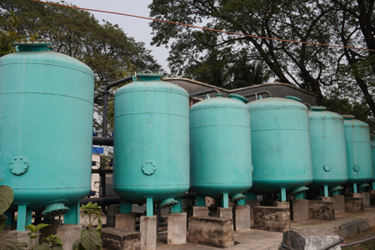
The tightest spots are sourcing steel plates for pressure vessels and the lengthened schedule fabricate. Fabrication facility capacity is finite, creating longer lead times as demand or fabrication time exceeds capacity. Adsorbent media can be another pinch point depending on application. Valves, instrumentation, and controls are long-lead items, sometimes critical-path items that are easy to underestimate and hard to substitute late in the process. Electrical gear such as panels and switchgear, along with service upgrades at remote wellsites, can add months or quarters on its own. Skilled labor is the last constraint: installers, commissioning technicians, and operators are all in demand at the same time.
The most useful thing a mid-sized system can do is stop treating procurement as the step that follows design. A good deal of procurement work can proceed in parallel with design and permitting.
Equipment specifications and bid documents can be developed while the design is still maturing. Vendors and fabricators can be pre-qualified, and long-lead items can be identified so that early orders or reservations are planned rather than improvised. It also helps to settle the contract vehicle early, since it determines how much of this work can overlap.
Vendors and fabricators know their own lead times better than anyone. Talking to them before the design is final gives you realistic delivery estimates, flags constraints before they become redesigns, and secures a place in the queue. It also helps to favor standardized or proven designs over custom builds wherever site conditions allow. A proven vessel configuration is easier to quote, fabricate, permit, and operate than a one-off.
Mid-sized utilities rarely have a procurement department that can run a major capital program, and their boards approve spending on fixed meeting cycles. Strategies that fit that reality include pre-negotiated or packaged equipment procurement, design-build delivery that brings the fabricator and contractor in early, and phasing wellhead projects so that the first installation proves the design and later ones repeat it. Whatever the approach, build the board's approval calendar into the schedule from the start.
Common Mistakes That Cause Delays Or Rework
The most frequent problem is skipping or shortening pilot work and then discovering that source water chemistry, such as competing ions, uranium, or iron, behaves differently than expected. Close behind is deciding on a waste and disposal path late, after equipment has already been chosen. Projects also stumble when the electrical, sewer, and site work is underestimated relative to the treatment equipment itself, or when the design is finalized before anyone has talked to fabricators and then must be reworked around real lead times and shop constraints. Operator training and media handling are too often treated as an afterthought.
The common thread is that the treatment system is only half the project. The other half is everything that surrounds it: who runs it every day, how media is changed out and where it goes, what happens to the waste stream, and what monitoring is required. Operators who were involved early in design are consistently more comfortable with the finished system.
The 2027 deadline is achievable, and the California State Water Board's compliance plan process provides flexibility for utilities that do the work to qualify for it. But achieving it means treating procurement and project delivery as the critical path rather than as steps that follow design. Developing a treatment plan and a credible path forward is just as critical for reaching compliance by October 1. That is especially true for operators who are below the limit but close to it, since they have the most to gain from acting before an exceedance forces their hand.
The large systems have given the rest of the state an early look at how long this process takes. The mid-sized systems that use that lesson now will be in a far better position than those that wait.
California's experience with Cr(VI) is also a model for what comes next. As other states and utilities face tightening limits on contaminants of concern in drinking water, the same questions will arise about how long treatment really takes, how to fund it, and how to get equipment built and installed on schedule. California is answering them first, in public, and everyone else can learn from it.
Rob Craw is the CEO of Rescue Engineers, a specialty water treatment partner that works with water systems on engineering, manufacturing, procurement, and project delivery for drinking water treatment systems. Rescue Engineers has delivered more than 100 pressure vessel treatment installations for California utilities, some of them in operation for over 20 years. For more information, visit RescueEng.com.