
Building AI Readiness In Wastewater Utilities: Lessons From CVWRF
By Navneet Prasad and Bryan Mansell
Artificial intelligence (AI) is quickly becoming part of the conversation around the future of water and wastewater utilities. While industries such as manufacturing and energy have already integrated AI into core operations, adoption in the water sector has progressed more cautiously, largely due to the critical nature of services, regulatory requirements, and the need for operational reliability.
As a result, many utilities are asking a practical question: How do we move beyond hype and implement AI in a way that delivers measurable, sustainable value?
At the Central Valley Water Reclamation Facility (CVWRF), the answer has been to focus less on tools and more on readiness. Rather than starting with software, the facility has taken a structured approach centered on building the foundational capabilities required to support AI over time. This experience highlights a key reality: successful AI adoption is not a single deployment, it is an incremental transformation.
From Interest To Implementation
A common starting point for utilities exploring AI is to pilot a software platform with the expectation of rapid results. However, early efforts, both across the industry and at CVWRF, have shown that without the right supporting infrastructure, these initiatives often fail to deliver on their promise.
In CVWRF’s case, initial investments in advanced analytics software revealed gaps in data availability, system integration, and hardware capabilities. Despite the potential of the technology, the lack of a supporting foundation limited its effectiveness. This experience led to a shift in strategy. Instead of viewing AI as a standalone solution, CVWRF began treating it as part of a broader operational and digital transformation. The focus moved toward building the systems, processes, and organizational alignment needed to support AI at scale.
From this perspective, AI readiness is best understood as a framework built on four interconnected pillars.
4 Pillars Of AI Readiness
1. Data and Digital Infrastructure
Reliable data is the backbone of any AI initiative. However, the challenge for many utilities is not the absence of data but the lack of consistency, accessibility, and governance. Spreadsheet-based workflows, still common across the industry, often introduce version control issues and limited traceability. This creates uncertainty around data accuracy, which undermines both operational decisions and any advanced analytics built on top of it.
At CVWRF, improving data quality began with establishing centralized systems that provide visibility into data lineage, tracking where data originates, how it changes, and who modifies it. Role-based controls ensure that only authorized personnel can adjust critical inputs while maintaining a clear audit trail. At the same time, infrastructure upgrades focused on improving connectivity. SCADA modernization, sensor upgrades, and selective use of cloud-based platforms have helped create a more integrated environment. The goal is not necessarily full centralization, but interoperability to ensure systems can communicate effectively across platforms. Early and continuous collaboration between IT and OT teams has been essential in this process, helping avoid integration challenges that can limit the value of new technologies.
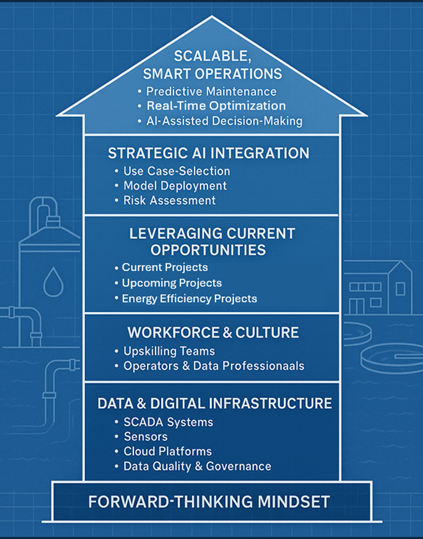
Figure 1. CVWRF’s 4 Pillars of AI Readiness
2. Workforce and Culture
Technology alone does not drive transformation; people do. For AI to be effective, utilities must invest in building a workforce that understands how to use it. At CVWRF, this is an ongoing effort, with targeted training being actively developed and implemented across operations, maintenance, and engineering teams, focusing on both the capabilities and current limitations of AI.
Positioning AI as a tool that augments and not replace human expertise, continues to be a key priority. As employees begin to see AI as a way to reduce repetitive tasks and provide better insights, adoption is gradually becoming more natural. This cultural shift is still evolving, but it is laying groundwork to ensure that as new tools are introduced, they can be effectively utilized and supported over the long term.
3. Leveraging Capital Projects for Digital Readiness
Capital projects present a key opportunity to prepare for future AI applications. Rather than replacing equipment in kind, CVWRF has incorporated digital capabilities into major upgrades. This includes deploying smart devices such as advanced VFDs, intelligent motor control centers, protection relays, and power quality meters. These investments provide granular, real-time operational data that can support future analytics and predictive maintenance strategies.
Electrical infrastructure upgrades have been particularly impactful. Modernized switchgear with intelligent components has improved system visibility and created a foundation for advanced applications such as digital twins and automated power system management. By aligning capital planning with digital strategy, utilities can avoid costly retrofits and accelerate their readiness for AI.
4. Starting Small and Scaling Strategically
With foundational elements in place, AI can be introduced through targeted use cases. CVWRF has focused on solving specific operational challenges rather than deploying broad, all-in-one solutions. This approach reduces risk, demonstrates value early, and builds internal confidence. Over time, successful use cases can be expanded and integrated into broader operational workflows, enabling a scalable path forward.
AI In Practice: CVWRF Use Cases
Intelligent Load Shed System
One of the most impactful applications at CVWRF is the development of an intelligent load shed system, which is nearing deployment and has the potential to evolve into a full electrical systems digital twin. The initiative was driven by recurring power system disturbances such as voltage sags, brownouts, and transient events that can reduce available system capacity and lead to cascading trips across interconnected electrical loads.
An intelligent load-shedding system addresses this by dynamically balancing system load with available power supply. By continuously monitoring key electrical parameters such as voltage, frequency, and real-time load demand, the system automatically sheds non-critical loads based on predefined priority schemes. This helps maintain system stability, preserve critical operations, and prevent widespread outages, shifting the response from manual intervention to a coordinated, real-time control strategy.
At CVWRF, the system leverages data from modernized electrical infrastructure to provide enhanced visibility into overall system performance. It also establishes the foundational layer for a future electrical digital twin, creating the data and control framework required for advanced applications such as predictive maintenance and system-wide optimization.
Data Quality and Governance
Improving data quality at CVWRF has centered not just on storage and traceability, but on establishing a structured quality control (QC) and review process. Rather than accepting data at face value, especially for critical operational or regulatory inputs, the facility has implemented a role-based review and approval workflow. Data such as laboratory results or compliance metrics undergo multiple levels of review within the team before reaching a final approver. Each step is clearly defined, ensuring accountability and consistency in how data is validated. This organized approach reduces the likelihood of errors propagating through the system and reinforces confidence in both daily operations and regulatory reporting.
To support this process, CVWRF is leveraging digital tools that enable data validation, auditability, and visual QC mechanisms. These platforms provide structured workflows for review and approval, along with features such as audit trails that document who reviewed or modified data and why. In addition, visual cues such as trend deviations, threshold alerts, and outlier detection help flag anomalous data points that may otherwise go unnoticed. By combining disciplined review processes with technology-enabled validation, CVWRF ensures that only vetted, high-quality data is used for decision-making and downstream AI applications.
The Path Forward
At CVWRF, the path toward adoption of AI is guided by a clear principle: focus on value-driven use cases that address real operational challenges. Rather than chasing technology trends, the facility has prioritized solutions such as intelligent power system management and robust data governance that deliver measurable improvements in reliability, efficiency, and decision-making.
AI holds significant potential to transform how water utilities operate, enabling greater system visibility, more predictive maintenance, and more informed planning and decision-making. However, realizing this potential requires more than access to technology. It demands a deliberate strategy built on strong data foundations, connected infrastructure, and a workforce prepared to leverage these tools effectively.
CVWRF’s experience underscores that there is no one-size-fits-all path to becoming a smart utility. The most successful approach is intentional and phased, aligning technology investments with operational priorities and scaling from proven, high-value applications.
What emerges from this approach is more than incremental improvement. It is a shift in how utilities operate, moving from reactive response to predictive, insight-driven decision-making. AI is no longer a future concept for the water sector; it is an inflection point. Utilities that invest in the right foundations today and advance through practical, value-driven applications will not only improve performance, but they will also define the next generation of resilient, intelligent water systems.
 Navneet Prasad, PE, is an Electrical Controls Engineer at CVWRF focused on electrical systems, controls, and digital transformation.
 Bryan Mansell, PE, is the Chief Engineer at CVWRF, leading engineering strategy and innovation initiatives across the facility.