
Breaking Point: How Utilities Can Get Ahead Of The Water Main Crisis
By Christian Bonawandt
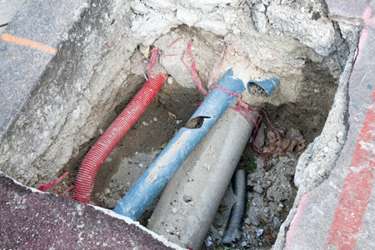
The water and wastewater industry is currently grappling with a significant aging pipeline infrastructure crisis, a challenge that requires a shift from reactive repairs to proactive, data-driven management. In a recent webinar hosted by Kevin Westerling, Chief Editor of Water Online, industry experts Christine Ballard (CDM Smith), Greg Baird (Black & Veatch), and Andrew Beck (Garney) outlined a practical framework for addressing infrastructure repairs in ways that are fundable and executable. Titled, “Find And Fix: How To Address The Aging Pipeline Infrastructure Crisis,” the event emphasized that the crisis is not just about the age of the pipes, but about managing risk, optimizing financial resources, and leveraging modern technology to ensure long-term system resilience.
The Drivers Of The Infrastructure Crisis
There are many reasons why a utility might choose to repair or replace a pipeline, from urgent leaks to long-term planning and prevention. Ballard categorized these objectives into four key buckets: finding and fixing persistent leaks, developing recurring renewal programs, minimizing risk to critical assets, and validating the current condition of assets in the ground. She noted that many utilities are now focusing on long-term renewal to effectively use available funds across their entire communities.
Baird highlighted the scale of the problem by referencing a study of more than 800 water utilities in the U.S. and Canada. The study revealed that 86% of distribution system inventory consists of pipes less than 12 inches in diameter, with cast iron and asbestos cement pipes showing the highest break rates due to their age. National report cards, he added, further showcase the urgency of the situation, as drinking water and wastewater infrastructure frequently receive subpar grades.
Expanding on this, Beck said, “Many of our water and sewer lines in the United States are 50 to 100 years old, with an average system age of approximately 45 years. So this has many potential impacts that include number one beyond its useful life — are the pipelines beyond its useful life or the design life of the system?” Beyond mere age, he identified population growth, industrial development (such as new manufacturing plants), governmental regulations, and weather impacts like drought as primary drivers for capacity increases and system improvements.
The Role Of Data And Pre-Planning
At the start of every renewal project, the utility must first assess the information it already has and identify what is missing. Ballard advised utilities to look at hydraulic models, maintenance records, and level of service for critical customers. She shared an example of a client who initially wanted to focus on hydraulic bottlenecks but discovered, after reviewing maintenance records, that the real issue was a specific “vintage” of pipe experiencing recurring breaks. She also emphasized the value of remote sensing meters with pressure-sensing capabilities and acoustic monitoring systems that can listen for leaks over time, allowing operators to catch issues before they become catastrophic.
Baird discussed the financial implications of planning, specifically what he called the “Law of Fives,” which suggests that if maintenance is neglected, the eventual repairs will cost five times as much. He warned that many utilities are currently caught in a reactive maintenance cycle characterized by inadequate budgets, increased backlogs, and premature failures. But by gathering condition data, utilities can justify their budgets to city managers and finance directors, demonstrating how investment in condition assessment saves money over time.
From a construction perspective, Beck emphasized that successful installation is rooted in meticulous pre-planning and collaboration between owners, engineers, and operations teams. This includes identifying shutdown strategies, contingency planning for what might go wrong, and creating hour-by-hour schedules for critical work. He noted that for large-diameter pipes (36-inch and larger), safety parameters such as confined space procedures and "double block and bleed" isolation are non-negotiable. “I think once you have a plan in place, we can execute and more importantly, we can safely execute the plan,” he said. “I'm talking a lot about planning because it's such a key component to how we handle each of these.”
Advanced Investigation And Decision-Making Technologies
The panel agreed that there is no shortage of investigation technologies available; the challenge lies in selecting the one most appropriate for the specific project goals. Beck described the current era as a “golden age of technology,” though he noted that there are limitations tied to how quickly staff can be trained on a given solution. He detailed several tools used at Garney, including:
- LiDAR for capturing erosion, voids, or persistent wet areas.
- Robotics and smart pipeline inspection gauges (PIGs) to collect data on wall thickness, corrosion depth, and broken wires in prestressed pipe.
- Drones for both aerial and interior pipe inspections.
- Ground Penetrating Radar (GPR) attached to excavator buckets for real-time utility detection when as-builts are missing.
Before choosing a technology, Ballard suggested that utilities must decide its purpose: do they need to determine the extent of a problem, identify its root cause, or simply monitor a critical asset over time to extend its life? She cautioned against gathering data for its own sake, stating that information must lead to quantitative results that improve the overall project outcome. “I like to say that you need to make sure that what you’re doing is appropriate for your particular project,” she said. “Can we agree that the information we're going to obtain is credible? Is this something that is going to be useful towards our results?”
Baird argued that moving from age-based replacement to risk-based capital planning is the key to asset management. He presented an example where this approach saved a utility $32 million compared to simply replacing pipes based on their chronological age. He also highlighted the transformative role of artificial intelligence (AI) and machine learning in analyzing CCTV footage of sewers, which can reduce human error and allow utilities to focus their cleaning and repair efforts where they are most needed. However, Baird also issued a warning regarding cybersecurity, noting that operational technology (OT) must be protected by changing default passwords and removing direct web access to critical assets like SCADA systems.
Performing The Work And Lessons Learned
When it comes to the execution of maintenance, the panel stressed the importance of lifecycle thinking. Baird pointed out that the average pipe replacement cycle is 125 years, yet the average water main break occurs at age 53. In addition, he noted that 65% to 85% of an asset's total lifecycle cost is locked in during the initial design and construction phases, depending on how accessible the pipe is for future maintenance.
Ballard focused on how proper planning pays off during construction by preventing large, unexpected expenditures. “Proper planning prevents large expenditures later on,” she said. “That means understanding where your shut offs are, understanding where your risk is. So if you know the pipeline material and what your failure rates are on a particular pipeline, you can consider that in the larger scope of the project.”
She also addressed the issue of non-revenue water (NRW), explaining that a utility's “water equation” must be accurate to ensure they aren't chasing nonexistent leaks caused by miscalculations or misaligned billing cycles. She recommended installing advanced metering infrastructure (AMI) to better align source water data with customer usage.
For critical infrastructure shutdowns, Beck said there is “little to no room for error.” He emphasized the “point of no return” communication, where the construction team confirms with operations that a line is about to be cut and will be out of service for a specific number of hours. This level of coordination ensures that if an unforeseen break occurs elsewhere in the system, the team can punt and reconsider the shutdown before the system is compromised.
Addressing Specific Industry Challenges
During the Q&A portion of the webinar, the experts addressed several nuanced challenges facing utilities today. In response to a question on corrosion in coastal areas, Ballard recommended static acoustic monitoring devices. Because high water tables can prevent leaks from surfacing, she insisted these devices are essential for detecting breaks that would otherwise go unnoticed.
When asked about the cost-effectiveness of assessing water and sewer lines simultaneously, Baird suggested using GIS layered technology to coordinate with public works departments. By bundling projects, utilities can avoid the frustration of digging up the same street multiple times, which is often a point of contention for city councils and residents.
Another question focused on how to encourage organizational culture to shift from reactive to proactive maintenance. Baird suggested finding a champion within the organization — such as a board or council member — to advocate for the transition. He also recommended benchmarking progress against industry standards like those from the American Water Works Association (AWWA) to demonstrate the benefits of a proactive approach.
Regarding material selection, Beck noted that soil conditions and the need for a quick return to service often dictate the choice. While steel is often used for large diameters in Texas, smaller emergency repairs might favor ductile iron or PVC for ease of installation. Addressing a question on pre-stressed concrete cylinder pipe (PCCP), Beck clarified that it is a good material, but its integrity depends heavily on cathodic protection to prevent wire breaks.
Overall, the webinar underscored the importance of taking a holistic approach to addressing aging infrastructure. This means integrating financial planning, condition assessment, advanced analytics, and disciplined construction execution. By moving away from purely age-based replacement and embracing risk-based capital planning, utilities can maximize the lifespan of their infrastructure while ensuring the safety and reliability of water services for their communities. As Ballard concluded, “The more information that you have in your toolbox, the better you can piece together the cause and effect and get the results that you’re looking for.”
About the Speakers
 Christine Ballard, Vice President at CDM Smith, has been guiding water and wastewater agencies with project planning, delivery, and implementation for over 20 years. She has acted as the principal-in-charge and Engineer of Record (EOR) for a variety of projects and is known for her ability to guide utilities through challenging circumstances so that they may achieve their objectives within a desired timeframe. Christine has extensive experience in regulatory compliance, water and wastewater planning, pumping systems, water treatment and distribution, force mains, wastewater treatment, and sanitary gravity line rehabilitation. In her role as the EOR and water/sewer engineer, she was directly responsible for capital planning and implementation and is regarded in the industry for doing so in a fiscally responsible manner by bringing together operational efficiencies, grant opportunities, and new revenue resources.
 Greg Baird, Principal Consultant - Utility Financial Management at Black & Veatch, is an expert in infrastructure advisory services in North America, combining utility management, infrastructure asset management, regionalization, smart technology, and finance. He is a financial-management and asset-management subject matter expert for water and sewer districts, with experience as a municipal finance officer in California, utility CFO in Colorado, and financial/infrastructure consultant with Black & Veatch, MWH, and GHD. Greg is focused on training governments and utilities to improve the cost-effectiveness of their operations through the use of technology and asset-management practices, and has been a leader for two decades in the efforts to address the aging water infrastructure funding crisis.
 Andrew Beck, Regional Operations Manager at Garney, oversees the national water and wastewater contractor’s Western Pipe Division. He has served as a project manager and senior project manager on some of Garney’s largest construction manager-at-risk (CMAR) pipeline projects in Texas, including a 32-mile raw water pipeline transporting 54 million gallons per day from Lake Ralph Hall and a nearly 47-mile pipeline for the Bois d’Arc Lake project. He is known for his safety-focused leadership and collaborative approach, aligning owners, designers, and field crews to keep work moving efficiently from planning through closeout.
Christian Bonawandt is an industrial content writer for Water Online. He has been writing about B2B technology and industrial processes for more than 25 years.