
Beyond Compliance: The Utilities Setting A New Consumer Confidence Report (CCR) Standard

By Kevin Westerling,
@KevinOnWater
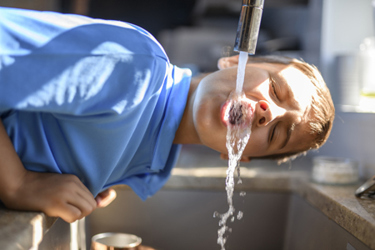
Every year, drinking water utilities across the U.S. publish Consumer Confidence Reports (CCRs), the federally required reports designed to inform customers about the quality of their drinking water. While utilities have generally succeeded in meeting regulatory requirements, communicating that information in a clear, accessible, and engaging way has proven more challenging.
That's the idea behind a new evaluation from TapWaterData, a water-quality information platform that recently assessed 25 major utility water quality reports. Rather than judging the quality of the water itself, the organization evaluated how effectively utilities communicate water-quality information to their customers. The resulting leaderboard identifies utilities doing the best job communicating water-quality information to the public.
TapWaterData evaluated reports using five criteria: clarity, contaminant transparency, information design, digital accessibility/delivery, and timeliness. The scores were based on published CCRs and EPA data, and the organization says no utility paid to participate.
Beyond the rankings themselves, the project offers a framework for evaluating the effectiveness of utility communication at a time when both customer expectations and regulatory expectations continue to evolve.
Leading the 2026 rankings is the Philadelphia Water Department, which earned an impressive 99 out of 100 and the only ‘A’ grade in the cohort. The median score across the 25 utilities reviewed was 69. Philadelphia was followed by Mount Pleasant Waterworks, Tucson Water, DC Water, and Denver Water to round out the top five.
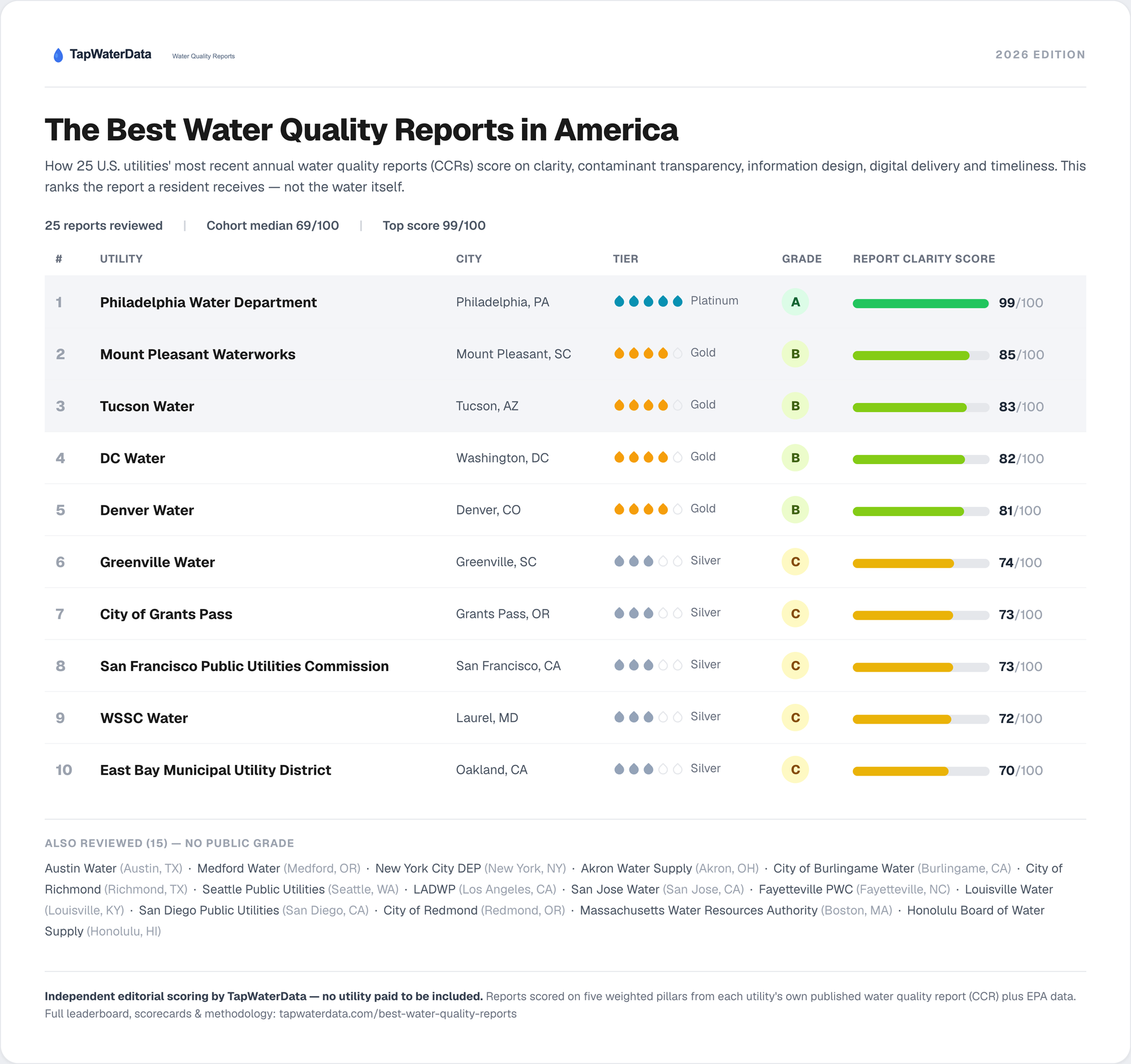
The top 10 of 25 U.S. utility water quality reports, scored by TapWaterData on clarity, transparency, design, delivery and timeliness. Philadelphia leads at 99/100. Source: TapWaterData — Best Water Quality Reports in America 2026 (https://www.tapwaterdata.com/best-water-quality-reports)
Regulatory expectations are evolving, and customer expectations are rising right along with them. For utilities, the CCR is increasingly becoming more than a compliance document; it's a customer communication tool. Utilities must still deliver safe, reliable water, but they also need to explain their work in ways customers can understand and use.
That shift is particularly relevant as the EPA's forthcoming CCR revisions place greater emphasis on accessibility, delivery, and public understanding. Utilities that treat communication as a core function rather than an annual obligation may find themselves better prepared for what's ahead.
Andy Zhang, founder of TapWaterData, has seen enough CCRs to know the pattern by now. Utilities check the compliance box, publish the required numbers, and move on — readability rarely factors in. "Every utility has to send residents a water report once a year, but almost none are required to make it readable, and most aren't," he said. "Philadelphia's proves a report can be both rigorous and genuinely readable, which is exactly the bar the EPA's 2027 CCR rule is about to set."
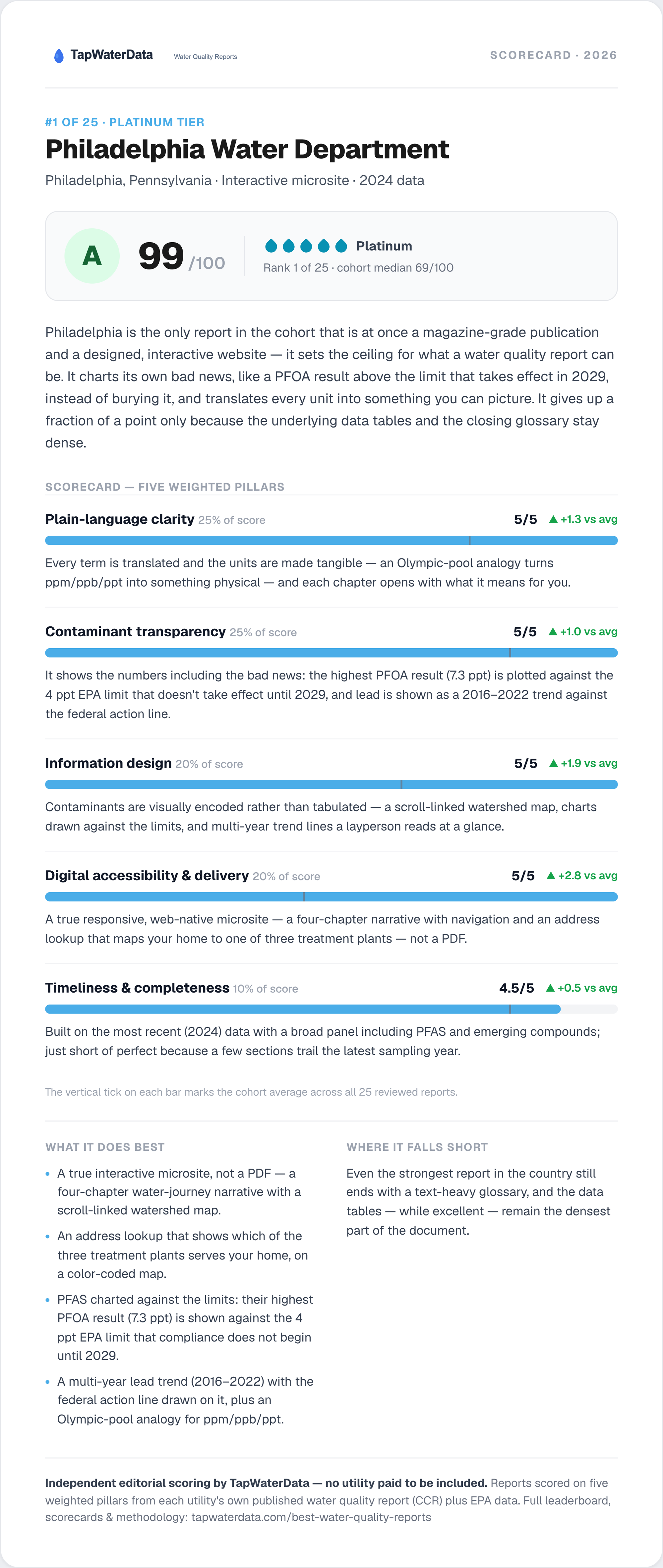
Philadelphia Water Department scored 99/100 (A) — the only report in the cohort that's at once a magazine-grade publication and an interactive website. Source: TapWaterData — Best Water Quality Reports in America 2026
The methodology is worth exploring, but the larger takeaway holds regardless of the scoring details: these rankings encourage utilities to take the customer experience of water-quality reporting seriously, and that's a conversation worth having.
As an industry, we spend most of our attention on infrastructure, treatment technology, and regulatory compliance — for good reason. But public trust doesn't rest on water quality alone. It depends on customers understanding the work behind it, and that only happens through communication.
Philadelphia's performance shows what's possible when a utility treats the annual water quality report as more than a compliance obligation. At its best, a CCR becomes a public education tool — one that helps customers understand their water, their utility, and the value of the service they rely on every day.
On a personal note, it's hard not to appreciate seeing Philadelphia Water Department atop the list. Water Online is headquartered just outside Philadelphia, so we're familiar with the utility's longstanding commitment to public outreach and innovation. It's encouraging to see that effort recognized on a national stage.
As the industry prepares for the next generation of CCR requirements, the utilities that treat communication as more than a box to check will be the ones setting the pace.
For the full rankings with scorecards, visit TapWaterData's Best Water Quality Reports in America 2026 project.