
Anaerobic Digestion Provides Energy And Revenue Opportunities At U.S. Water Resource Recovery Facilities
By Patrick Serfass
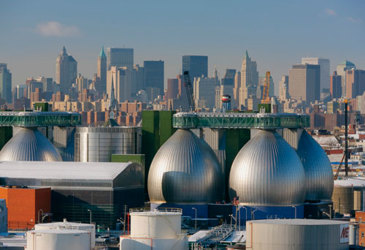
New nationwide research reveals how today's water resource recovery facilities (WRRFs) are turning wastewater into renewable energy, where adoption remains uneven, and why thousands of municipal facilities still present untapped resource recovery potential.
For decades, wastewater operators have regarded anaerobic digestion primarily as a reliable way to stabilize biosolids and reduce disposal costs. At many WWRFs, digesters were just another piece of process equipment that supported plant operations behind the scenes.
A new report from the American Biogas Council (ABC), Anaerobic Digestion at U.S. Water Resource Recovery Facilities, reveals that picture is changing. The report is the first comprehensive assessment of anaerobic digestion at U.S. WRRFs in more than a decade. The findings draw on an 18-month nationwide survey ending September 2026, including 33,000 calls to nearly 5,000 WRRF facilities and interviews with managers, operators and other key personnel at 3,271 of them. ABC identified 1,213 facilities operating anaerobic digesters and received 380 completed, detailed questionnaires with additional details.
The report shows that facilities increasingly leverage their digesters as energy infrastructure; they generate electricity, produce renewable natural gas (RNG), and recover nutrients. In some cases, facilities save millions of dollars in operating expenses, to the benefit of ratepayers.
The study used 1 million gallons per day (MGD) as the generally accepted minimum threshold at which utilizing anaerobic digestion would be clearly economically feasible for a facility. The threshold is not absolute, however; many facilities treating less than one MGD use digesters to produce energy or heat. The research highlights that despite more than a century of successful deployment, only about 25% of U.S. WRRFs large enough to support anaerobic digestion economically currently operate digesters.
For wastewater professionals facing rising energy costs, aging infrastructure, and growing expectations around sustainability, the findings suggest that anaerobic digestion deserves renewed attention as an underutilized opportunity.
A Mature Technology With Untapped Reach
The ABC survey identified 1,213 WRRFs currently operating anaerobic digesters across the United States. Together, these facilities process nearly two-thirds of the wastewater that facilities large enough for anaerobic digestion treat and capture approximately 100.8 billion cubic feet of biogas annually.
Employing anaerobic digestion at municipal wastewater facilities is not a new idea. The earliest operating digester the survey identified dates to 1914 in New York, and the largest wave of installations occurred between the 1960s and 1990s. Even today, new projects continue to come online, with 29 additional WRRF digesters entering service since the end of 2020 — about one every quarter. Now, resource recovery rather than sludge stabilization drives the installation of new anaerobic digesters.
Facility Size Still Matters
A clear pattern emerged related to the relationship between plant size and digester adoption.
Among facilities treating more than 30 MGD, more than 75% operate anaerobic digesters. Adoption falls to roughly half among facilities between 5 and 30 MGD, and below 30% among plants under 5 MGD. This helps account for why only 24% of facilities have digesters while those same large facilities treat 63% of the wastewater flowing through the nation's viable WRRFs.
The largest participating was the Stickney Water Reclamation Plant in Chicago with an average wastewater treatment volume of 700 MGD. It is one of the world’s largest. The overall average flow for the 1157 facilities that we have data for out of the total 1231 WRRFs with AD is 15.7 MGD.
For engineers planning capital improvements, the findings reinforce an important point: larger facilities often have stronger economic justification for energy recovery investments, but smaller facilities can still benefit. The survey identified 103 operating digesters at plants below the traditional 1 MGD threshold (8% of all WRRFs with digesters), suggesting that local conditions including biosolids management needs, co-digestion opportunities, and available funding can make digestion economically viable at smaller scales.
On-Site Electricity Production Dominates
Despite growing interest in renewable natural gas (RNG), electricity generation is the most common use of biogas that U.S. WRRFs capture. Today, 669 facilities (55%) generate electricity from biogas, primarily through combined heat and power (CHP) systems that allow facilities to produce electricity while also recovering useful thermal energy.
Facilities use most of that electricity where they produce it. The survey found that 89% of WRRFs generating electricity from biogas use it on-site, helping offset the significant power demands of wastewater treatment and resource recovery operations.
Facilities generating electricity collectively capture approximately 67 Bcf of biogas annually, accounting for roughly two-thirds of all wastewater-sector biogas production.
For many operators, CHP continues to represent the most practical pathway for maximizing digester value because the thermal energy CHP systems recover alongside electricity helps maintain digester temperatures and supports other treatment processes.
RNG Is Growing, Primarily At Large Plants
In the broader biogas industry, facilities that produce RNG from their biogas represent the fastest growing end use segment, yet the production of RNG at WRRFs is less popular so far.
Only 46 WRRFs (4%) currently upgrade biogas to RNG. The research shows this is changing: nine wastewater RNG projects began operating since 2020, increasing the installed system base by roughly one-quarter in fewer than six years.
The economics largely explain the shift. RNG-producing WRRFs treat an average of 41 MGD, more than twice the treatment capacity of facilities generating electricity from biogas. They also produce substantially higher gas volumes, averaging 504 standard cubic feet per minute. This is the highest production rate of any biogas end-use category identified.
For municipal decision-makers evaluating future investments, this suggests that RNG production currently makes the strongest business case where substantial gas volumes already exist or where future co-digestion at the facility can significantly increase production.
Co-Digestion Expands The WRRF's Role
The survey highlights co-digestion as one of the most significant operational opportunities. In these facilities, wastewater sludge is combined with other organic waste such as food waste or fats, oils, and grease (FOG) to create additional waste management services for their community and boost biogas production.
Among facilities answering detailed questions about external feedstocks, 30% reported accepting organic wastes beyond wastewater sludge. Most commonly, facilities receive food waste and/or fats, oils, and grease (FOG).
For utilities already managing digesters, co-digestion can offer multiple advantages including:
- tipping-fee revenue
- higher methane and energy yields
- revenue from the sale of RNG or surplus electricity
- leveraging existing municipal infrastructure with minimal new investment
- expanded community waste diversion
Rather than requiring entirely new infrastructure systems, incorporating co-digestion allows existing municipal assets to perform additional, valuable community functions.
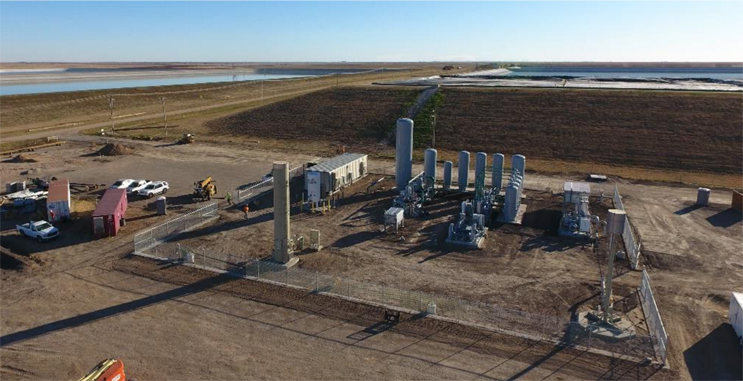
Biogas delivers big for the City of Dodge City creates community funding opportunity from wastewater. The revenue from the Wastewater Treatment Plant Biogas Facility pays for city operations and bond interest and is funding capital improvements without tax hikes.
Why Modern Projects Cost More
Capital investment data reveal another shift. Among facilities reporting project costs, installations completed before 2018 averaged approximately $7.5 million, while projects completed since 2018 averaged roughly $44.6 million.
The difference is that today's digester projects often represent comprehensive resource recovery facilities rather than standalone solids treatment improvements. These projects increasingly bundle anaerobic digestion with CHP systems, RNG upgrading equipment, co-digestion receiving infrastructure, and other resource recovery technologies that expand both functionality and project scale to achieve added energy production.
The Digestate Opportunity
While biogas production receives much of the attention, the digestate byproduct of the anaerobic digestion process presents further opportunity.
Among facilities reporting digestate management practices, nearly 75% already use land application for at least some digestate, thereby recycling nutrients and organic matter back into our soils. Only 8.6% currently market commercial fertilizer products, and those facilities tend to be substantially larger than average.
Meanwhile, 112 facilities (9%) that responded to the survey still send at least some digestate to landfills. Employing digestate for beneficial use offers another potential resource recovery opportunity beyond energy production.
State Leaders In Wastewater Biogas
The survey also illustrates how different states have developed distinctly different anaerobic digestion profiles. California leads the nation with 142 WRRF digesters; New York (110) and Pennsylvania (94) rank second and third.
The AD profile of these three is different. California continues adding facilities while maintaining strong representation across small, mid-size, and large plants. New York combines one of the nation's largest populations of small digesters with the greatest concentration of very large facilities. Pennsylvania has built one of America's largest digester networks primarily through smaller facilities.
Together, California and New York generate more than 27 Bcf of wastewater biogas annually, which is over 25% of the national total.
The Future View On WRRF Biogas Production
The report's most compelling finding is not how many digesters exist today, but how many more WRRFs could build them.
The ABC estimates that 3,787 WRRFs treating at least 1 MGD remain without anaerobic digestion. If those facilities adopted the technology, annual wastewater biogas production could increase from 100.8 Bcf to approximately 171.8 Bcf, enough renewable energy to power about 1.9 million U.S. homes annually.
For wastewater engineers and utility leaders, that opportunity extends beyond renewable energy. Anaerobic digestion can reduce biosolids handling costs, improve energy resilience, support co-digestion programs, create soil fertilizer products, and help municipalities recover more value from infrastructure they already own.
While the technology itself is not new, the opportunity to treat digesters less as legacy equipment and more as core assets in water resource recovery is key to creating an added value resource for communities.
Download the full report here.
 Patrick Serfass (patrick@americanbiogascouncil.org) is Executive Director of the American Biogas Council (ABC), the voice of the U.S. biogas industry. Since helping create ABC in 2010, Patrick has led its growth to represent more than 400 organizations and 6,000 professionals working to expand the use of biogas systems across the U.S.
Beyond biogas, Patrick has more than 25 years’ experience growing clean energy industries, like solar, hydrogen, biochar, and woody biomass. In Patrick’s early career, he was a physical oceanographer, architectural engineer and designed unmanned, deep ocean vehicles. Patrick holds a Bachelor of Arts in Engineering Sciences from Dartmouth College.