
America's Wastewater Plants Could Be A Much Bigger Source Of Renewable Power
Washington - Wastewater treatment plants in many American communities are doing more than treating sewage – they’re also producing renewable energy. According to new data released today from the American Biogas Council, 1,200 wastewater treatment plants across the United States currently capture and use biogas produced from wastewater sludge. That means wastewater treatment plants account for nearly half of the approximately 2,600 biogas facilities of all types operating in the United States today.
Together, these wastewater facilities capture more than 100 billion cubic feet of biogas per year, enough to power about 1.1 million U.S. homes (212 billion kilowatt-hours of electricity annually). But thousands more wastewater treatment plants could do the same and currently are not.
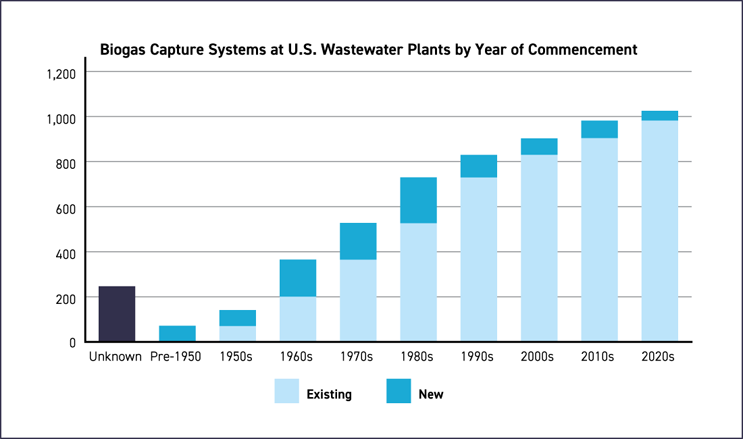
Across the country, some wastewater treatment plants use anaerobic digestion to break down sewage sludge, also called biosolids, to kill pathogens, odor, and reduce the volume of sludge state tax dollars pay to remove. As the material digests, biogas is released – a methane-rich gas that, if captured, can make renewable energy instead of going into the atmosphere. A biogas capture system collects this gas so it can be used to generate electricity or heat, displacing the need to use fossil fuels.
But only a fraction of the potential energy at America’s wastewater plants is captured, according to the ABC. About 3,800 more wastewater treatment plants have sufficient wastewater flows biogas capture to be a viable option. If these facilities captured their biogas and used it to produce energy, annual biogas production could increase to approximately 172 billion cubic feet, enough to generate electricity for approximately 1.9 million American homes – almost twice as much.
“We tend to think of wastewater treatment plants as places that consume energy, not places that can produce it,” said ABC Executive Director Patrick Serfass. “But communities have an opportunity to turn the waste stream we already pay to manage into reliable, renewable power. With electricity demand rising, capturing more of this energy can help communities meet their growing energy needs locally.”
Today, of the 1,200 facilities that capture and use their biogas, the vast majority generate electricity or heat at the plant to meet plant needs and reduce the amount of fossil fuel the plant purchases. One plant in the City of Tulare, California, has reported that its wastewater biogas-to-electricity system saves more than $1 million annually in avoided electricity costs. Additional power generation could also support data centers, manufacturing, transportation and other sectors with increasing demand for reliable, electricity to complement weather-dependent resources such as wind and solar.
Another subset of these 1,200 plants, about four percent, upgrade their biogas to renewable natural gas (RNG) by removing impurities and concentrating the methane so it matches the kind of gas in our gas pipelines and can be used as a direct substitute for conventional natural gas.
Explore the ABC’s Wastewater Fast Facts, additional graphs, biogas project profiles, and more in the American Biogas Council Newsroom.
About the American Biogas Council
The American Biogas Council is the voice of the U.S. biogas industry, representing all companies working to recycle organic waste into clean, locally made energy and fertilizer. Biogas capture systems recycle waste, food scraps, manure, and wastewater, keeping communities safe and clean, and supporting local economies. The ABC’s mission is to maximize the economic and environmental benefits of biogas while advancing sustainable solutions for energy, agriculture, and waste management. Learn more at americanbiogascouncil.org, on X @ambiogascouncil, Facebook, and LinkedIn.
Source: American Biogas Council