
After 50 Years Of Water Treatment Innovation, Why Is Advanced Oxidation Entering Its Most Important Decade?
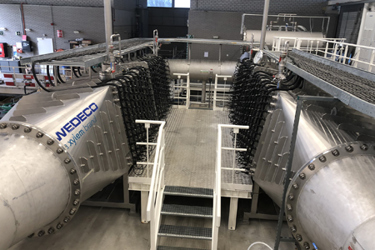
As utilities tackle persistent micropollutants, expand water reuse and meet more demanding treatment requirements, advanced oxidation is being asked to solve problems conventional approaches were not designed to address.
Some of water treatment’s hardest problems are becoming mainstream. Micropollutants are moving onto the regulatory agenda, while water scarcity and drought are pushing more utilities towards reuse. This is increasing the need for processes capable of doing more than conventional treatment trains were originally designed to achieve.
Advanced oxidation offers another approach. By combining technologies such as UV and ozone with oxidants including hydrogen peroxide, advanced oxidation can target difficult organic contaminants, helping remove persistent micropollutants and produce high-quality water for reuse. The changing treatment challenge puts WEDECO’s 50-year history in a new light. Since 1976, the role of UV and ozone has expanded from established disinfection and oxidation applications to advanced processes targeting micropollutants and enabling water reuse.
The impact is already visible. In Los Angeles, treatment incorporating WEDECO UV technology at the Terminal Island Water Reclamation Plant helps produce up to 12 million gallons of recycled water each day for groundwater replenishment and industrial use. In the Netherlands, water utility Dunea worked with Xylem on a sequential advanced oxidation process that achieved organic micropollutant reductions of up to 90% while managing naturally occurring bromide.
The versatility of advanced oxidation lies in how different technologies can be combined. UV, ozone, and other oxidants can work together in different ways depending on the water quality challenge at hand. And the individual technologies continue to evolve. That is where the engineering gets interesting.
As micropollutant removal moves from emerging concern to infrastructure priority, ozone and its combination with activated carbon are helping define what advanced treatment can achieve at scale. In Europe, more than 40 wastewater treatment plants are operating or will start up WEDECO ozone generators to help meet the latest requirements for micropollutant removal. At the Werdhölzli wastewater treatment plant in Zürich, eight WEDECO ozone systems were deployed to treat flows of up to 6,500 litres per second, making the installation the largest ozone project in Europe for micropollutant removal in wastewater.
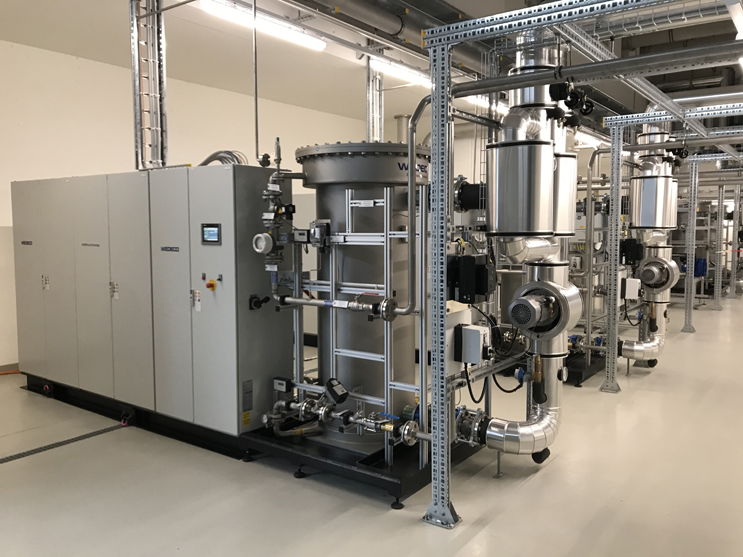
Building on this proven performance, the next generation of ozone solutions is designed to help utilities and industries move confidently into a more dynamic water future, with greater reliability, operational simplicity and adaptability at the core.
Xylem’s new WEDECO Evotide platform represents the latest evolution in ozone technology. Designed for applications including drinking water, micropollutant removal, and water reuse, it focuses on maintaining reliable ozone production under changing operating conditions while simplifying operation, monitoring and maintenance.
That innovation builds on five decades of experience. Today, more than 280,000 WEDECO systems have been installed globally across municipal and industrial applications.
“Treatment performance is no longer enough on its own,” said Géraud de Saint Exupéry, Senior Vice President and General Manager, Global Treatment, Xylem. “As utilities face more complex water quality challenges, advanced treatment must also be efficient, reliable and practical to operate at scale. That is where the next generation of technology has to deliver.”
The technologies behind advanced treatment are well established. What is changing is the scale and complexity of the problems they are being asked to solve. As micropollutant removal moves up the agenda and water scarcity drives greater demand for reuse, the coming decade could see advanced oxidation move from a more specialist treatment approach to a bigger role in how utilities respond – supported by technologies that combine proven performance with greater efficiency, reliability and operational simplicity.
Source: Xylem