
Advanced Water Treatment Strategies Help Data Centers Manage Cooling Water At Industrial Scale
By Ashish Kolte
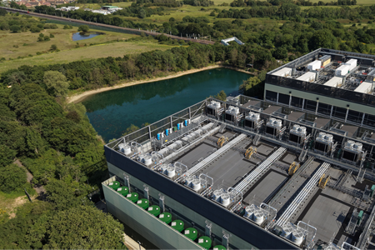
Data centers are evolving into industrial-scale thermal-management facilities as artificial intelligence (AI), high-performance computing (HPC), cloud platforms, and accelerated computing increase rack power density. Modern AI racks can exceed 50–120 kW per rack, creating substantially higher heat-rejection requirements than conventional enterprise infrastructure. ASHRAE's (American Society of Heating, Refrigerating and Air-Conditioning Engineers) AI Data Center Energy Performance Framework identifies liquid cooling as an important architecture for these high-density environments.
Water management, therefore, cannot be treated as a secondary utility function. Data center water treatment plays an increasingly important role because cooling-tower chemistry, heat-exchanger cleanliness, membrane performance, hydraulic pressure, and water availability directly influence thermal reliability. The global data center water treatment market was valued at approximately USD 4.53 billion in 2025 and is projected to reach around USD 9.04 billion by 2034, expanding at a CAGR of approximately 7.8% during 2025–2034 as per DataIntelo analysis. ASHRAE defines Water Usage Effectiveness (WUE) as annual facility water consumption in liters divided by IT equipment energy consumption in kWh, expressed as L/kWh.
This placement works well because the keyword and numerical market data appear together, while the paragraph still transitions logically from the technical need for water treatment to its broader commercial significance.
Cooling Water Chemistry Determines Operating Limits
Evaporative cooling systems reject heat by transferring sensible and latent heat to the atmosphere. As water evaporates, dissolved minerals remain in the circulating loop. Calcium, magnesium, silica, chloride, sulfate, alkalinity, and total dissolved solids (TDS) therefore progressively concentrate.
The fundamental cooling-tower water balance is:
Makeup = Evaporation + Blowdown + Drift + Leakage
For a simplified system, blowdown can be estimated as:
Blowdown = Evaporation ÷ (Cycles of Concentration − 1)
DOE documentation identifies cycles of concentration (CoC) as a key parameter because higher CoC reduces blowdown but increases dissolved-mineral concentrations and therefore the potential for scaling and corrosion.
For example, if evaporation is 1,000 L/h, operating at 3 cycles produces approximately 500 L/h of blowdown. At 5 cycles, blowdown falls to about 250 L/h, while at 7 cycles, it decreases to approximately 167 L/h. The corresponding theoretical makeup requirement also falls, although real systems must account for drift, leakage, control limits, and treatment losses.
Conductivity Becomes A Primary Control Variable
Conductivity is widely used as a proxy for dissolved ionic concentration in cooling-water control. Automated conductivity controllers can continuously compare recirculating-water conductivity against a programmed setpoint and initiate blowdown when the concentration limit is reached. DOE recommends combining conductivity measurement with makeup and blowdown flow measurement to verify that hydraulic and chemistry-based cycles of concentration are aligned.
A technically robust monitoring package can include conductivity, pH, ORP, temperature, turbidity, flow, differential pressure, corrosion rate, biocide residual, and chemical-feed rate. For higher-risk systems, online measurements of parameters such as silica, chloride, hardness, or specific inhibitor residuals can provide additional control.
The treatment target should not simply be “high cycles.” The optimum CoC is the highest value that remains below the site's scaling, corrosion, microbiological, and heat-transfer constraints.
Advanced Pretreatment Protects Heat Exchangers
Pretreatment begins with suspended-solids control. Multimedia filters, automatic self-cleaning filters, disc filters, cartridge filters, and side-stream filtration can reduce particulate loading before solids accumulate on heat-transfer surfaces.
Side-stream filtration is particularly useful because it does not require the entire circulating-water flow to pass through the filtration system. DOE notes that side-stream systems continuously remove suspended solids and organics and can reduce fouling, scaling, microbiological growth, and chemical demand.
A practical design may therefore monitor filter differential pressure in kPa, turbidity in NTU, and particle loading over time. A rising differential pressure indicates progressive media loading and can trigger automatic backwash or filter maintenance.
For reclaimed or surface-water sources, pretreatment may additionally require coagulation, clarification, ultrafiltration, activated carbon, or other contaminant-specific processes.
Reverse Osmosis Adds Dissolved-Salt Control
Reverse osmosis (RO) becomes valuable when cooling makeup water contains elevated TDS, hardness, chloride, sulfate, silica, or other constituents that limit cooling-tower cycles. RO uses pressure to separate dissolved contaminants from permeate, producing a concentrated reject stream. DOE identifies RO treatment of cooling-tower blowdown as one option for recovering water and reducing freshwater requirements in water-constrained data center locations.
RO design should be evaluated using several engineering parameters rather than recovery alone. Important variables include feed TDS, temperature, silt density index (SDI), membrane flux, operating pressure, recovery percentage, differential pressure, normalized permeate flow, salt rejection, cleaning frequency, and concentrate chemistry.
For example, a system receiving 100 m³/day of feed at 75% recovery theoretically produces approximately 75 m³/day of permeate and 25 m³/day of concentrate. Increasing recovery to 85% would reduce concentrate to 15 m³/day, but the higher concentration factor increases scaling risk and may require more aggressive pretreatment.
Regional Water Stress Changes Treatment Architecture
Regional water availability is becoming a major engineering variable. A treatment system designed for a humid region with abundant municipal supply may be unsuitable for an inland site dependent on stressed groundwater.
India provides a strong example. Data center development is increasingly concentrated around major technology hubs, while water availability varies substantially between basins and states. Consequently, engineers should evaluate source-water TDS, hardness, alkalinity, seasonal availability, wastewater quality, reclaimed-water availability, and local discharge limits before selecting a cooling architecture.
For water-stressed locations, reclaimed municipal wastewater can reduce dependence on potable supplies, but it normally requires a more sophisticated treatment train. A conceptual reclaimed-water system could include screening → coagulation/clarification → multimedia filtration → ultrafiltration → RO → disinfection → cooling-tower makeup.
Liquid Cooling Changes The Water Equation
AI workloads are also changing the relationship between IT power and cooling-water demand. ASHRAE's current AI framework identifies rack densities above 50–120 kW as environments where technology cooling systems become increasingly important.
Direct-to-chip liquid cooling can transfer heat from processors into a closed liquid loop, reducing dependence on room-level air cooling. Warm-water cooling can potentially operate without conventional chillers in suitable climates, while dry coolers can approach near-zero cooling-water consumption. ASHRAE reports that certain integrated liquid-cooled designs can achieve PUE values near 1.10, compared with approximately 1.4–1.6 for traditional designs.
This creates an important engineering trade-off: reducing onsite water consumption may increase fan or compressor electricity requirements, particularly in hot climates. Therefore, WUE should always be evaluated alongside PUE.
Blowdown Recovery Can Produce Quantifiable Savings
Consider a hypothetical facility requiring 10 million liters/year of cooling-tower makeup water. A 20% reduction through improved CoC, filtration, leak reduction, and blowdown recovery would save 2 million liters/year.
At 100 million liters/year, the same 20% improvement would save 20 million liters/year.
The economic value becomes larger when water, wastewater discharge, chemicals, and energy are evaluated together. However, recovery systems must account for concentrate disposal, membrane cleaning, pretreatment chemicals, pumping energy, and capital expenditure.
WUE Converts Water Performance Into An Engineering KPI
WUE provides a direct way to normalize water consumption against IT energy use. For a continuously operating 1 MW IT load, annual IT energy consumption is:
1 MW × 8,760 h = 8,760 MWh
If annual onsite water consumption is 8.76 million liters, WUE equals approximately 1.0 L/kWh. Reducing water consumption to 4.38 million liters lowers WUE to approximately 0.5 L/kWh, representing a 50% reduction.
However, the metric should be segmented. Operators should distinguish direct onsite cooling water, humidification water, treatment losses, blowdown, reclaimed-water consumption, and broader electricity-related water impacts.
Digital Treatment Control Enables Higher Precision
Industrial-scale treatment increasingly depends on automation. A supervisory control system can combine conductivity, pH, ORP, temperature, flow, pressure, turbidity, and chemical-residual data with cooling load and weather information.
An automated algorithm can adjust blowdown valves, chemical dosing, filtration cycles, and RO operation according to real-time conditions. Alarm thresholds can identify abnormal conductivity increases, membrane fouling, filter loading, chemical underfeed, leakage, or sudden changes in makeup-water quality.
The result is a transition from fixed chemical dosing toward condition-based water treatment.
Technical Performance Should Be Measured As A System
A mature data center water strategy should track at least WUE, PUE, CoC, makeup flow, blowdown flow, evaporation rate, conductivity, TDS, pH, silica, hardness, corrosion rate, turbidity, filter differential pressure, RO recovery, membrane salt rejection, concentrate volume, chemical consumption, and water-reuse percentage.
The objective is not simply to maximize one number. Running at 10 cycles instead of 5 cycles, for example, is not automatically better if scaling forces heat-exchanger cleaning, increases corrosion, or threatens cooling availability.
DOE emphasizes that higher cycles are constrained by makeup-water quality and treatment chemistry.
The Industrial-Scale Treatment Strategy
The most resilient architecture combines source-water characterization, pretreatment, side-stream filtration, automated conductivity control, corrosion and scale inhibition, microbiological control, RO or other membrane recovery, water reuse, and continuous monitoring.
For high-density AI facilities, engineers should simultaneously evaluate rack thermal density, coolant temperatures, heat-exchanger approach temperature, cooling-water chemistry, WUE, PUE, seasonal wet-bulb conditions, water scarcity, and discharge requirements.
The next generation of data centers will therefore treat water as an engineered resource rather than a simple utility input. Facilities that integrate advanced treatment with liquid cooling, digital controls, water reuse, and site-specific hydrological planning can reduce freshwater dependence while maintaining the thermal stability, equipment protection, and availability required for continuously operating digital infrastructure.
Reference: https://dataintelo.com/report/data-center-water-treatment-market
Ashish Kolte is a Marketing Manager at DataIntelo with expertise in marketing, market intelligence, and business strategy. He combines marketing insights with industry research to help organizations understand market dynamics, identify growth opportunities, and make data-driven decisions. His areas of interest include emerging technologies, artificial intelligence, healthcare, industrial markets, and global business trends. Through his writing, Ashish shares research-backed perspectives on evolving industries and strategic market developments.