
Advanced Metering Infrastructure: A Platform For Utility Resilience And Public Safety
By Bharat Khanna and Richard Relyea
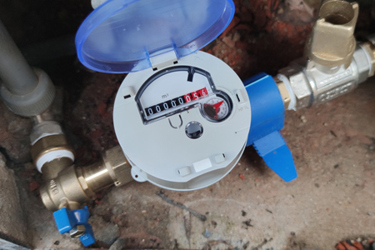
Advanced metering infrastructure (AMI) is transforming water utilities by enabling real-time monitoring, leak detection, and emergency response. It enhances public safety, supports sustainability, and reduces operational costs. Cities like Singapore and Albuquerque are using AMI for predictive maintenance and water quality control. To fully realize AMI’s potential, utilities must adopt a strategic digital approach aligning technology with operations and customer engagement for resilient, intelligent water management.
AMI delivers far more than accurate billing and consumption tracking — it is becoming a vital tool in supporting community safety, emergency response, and long-term resilience. Forward-looking utilities are transforming AMI from a cost center into a strategic asset, capable of enabling faster response to crises, improving service delivery, and supporting environmental sustainability.
What Is Advanced Metering Infrastructure?
-- Bharat Khanna, Executive Advisor at GHD
AMI transforms how water utilities operate, creating smarter ways to manage services and engage with the community. Unlike traditional meters that require manual reading, AMI uses a connected, intelligent network to automatically collect and transmit real-time data. The two-way communication capabilities allow for remote monitoring, early leak detection, precise billing, and reduced operational costs — while also enabling new applications that improve safety and responsiveness.
Emergency Response: AMI In Action
Utilities in Louisville, Colorado and Paradise, California are at the forefront of using AMI to support emergency management. In wildfire scenarios, continuous monitoring from AMI enables utilities to maintain water services in priority areas and make timely, data-informed decisions. In Louisville, the use of remote shut-off valves allows teams to isolate damaged structures quickly, helping to conserve water and preserve pressure where it’s needed most.
Public Safety And Water Quality Monitoring
Beyond emergencies, AMI also plays a vital role in public safety through continuous water quality monitoring. Innovative utilities are integrating sensors capable of detecting contaminants and anomalies in real time — far faster than traditional lab testing. This supports immediate responses to potential threats and strengthens public health protection.
Globally, AMI-enabled systems are proving their value. Singapore’s Smart Water Grid, operated by the Public Utilities Board (PUB), is underpinned by a robust AMI network. It integrates an island-wide array of sensors and advanced analytics to provide real-time visibility of water quality and system performance. This framework tracks turbidity, chlorine levels, pH, and other indicators, enabling quick action to uphold high water standards and maintain a resilient supply.
Environmental Stewardship Through Data
AMI also helps utilities meet sustainability goals. Accurate, real-time data enables early leak detection and better conservation efforts. By identifying inefficiencies and wasteful practices, utilities can reduce water loss and enhance resource stewardship — critical benefits as climate variability increases stress on water supplies.
In Albuquerque, the Bernalillo County Water Utility Authority (ABCWUA) is using AMI to strengthen pressure management. By pairing smart meters with modern analytics, ABCWUA has moved from reactive troubleshooting to predictive management. What previously took weeks to detect and resolve, can now be handled in hours, saving time, reducing costs, and boosting customer service. The utility is also planning to use AMI insights to enhance hydraulic modelling and control water loss more precisely.
The Future: AMI As A Transformation Platform
Looking ahead, AMI is evolving into the digital backbone of modern utilities. No longer limited to meter reads, the next generation of AMI will enable predictive maintenance, demand forecasting, and real-time pressure optimization. It will support digital twins for system modeling, connect to smart home devices, and integrate AI tools to streamline operations.
Edge computing at the meter will soon allow on-site detection of leaks or anomalies, reducing reliance on central systems and delivering faster responses. This convergence of real-time analytics and connected infrastructure will help utilities respond with agility while improving customer experience.
However, realizing this potential requires more than deploying new technology. It calls for a cohesive digital strategy that aligns IT, operations, asset management, and customer service. A clearly defined roadmap is essential to link AMI infrastructure with data analytics, workforce tools, and engagement programs.
AMI's full value extends well beyond billing accuracy. These intelligent networks are crucial infrastructure for emergency response, safety, and sustainability. For utility leaders, the imperative is clear: adopt a strategic approach that maximizes AMI’s potential across operations. Those who do will not only improve community outcomes but also position themselves as leaders in water utility excellence.
 Bharat Khanna is a Market Development Lead at GHD who helps clients achieve value from digital technologies across infrastructure, energy and the built environment. With over 25 years’ experience, he specializes in digital strategy, IoT, and advanced metering infrastructure (AMI 2.0) to deliver more connected, resilient, and sustainable assets. Bharat has led innovative programs including smart utilities & campus and infrastructure initiatives, bringing together technology and practical delivery. He has held senior roles with WSP, AECOM, NEC, and Ericsson, and works across global markets including North America, APAC, and EMEA.
 Richard Relyea is a senior project manager and mechanical engineer at GHD with over 20 years of experience in water infrastructure across the western U.S. and internationally. He specializes in water distribution systems, including water loss management, pipeline design, and advanced metering, leading projects that improve efficiency and reliability for public and private sector clients. Richard brings a practical, data-driven approach, applying technologies such as AI and machine learning to support leak detection and system performance.