
WASTEWATER
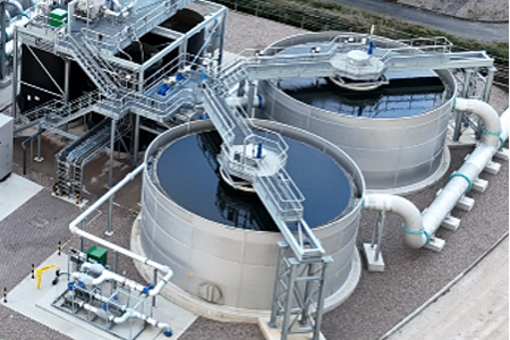 How To Intensify Phosphorus Removal While Reducing Costs And Footprint
Ballasted clarification provides intensified phosphorus removal with a smaller footprint, lower chemical and water consumption, and flexible retrofit options for wastewater treatment plants.

WASTEWATER CASE STUDIES AND WHITEPAPERS
-
 Best Strategies For Monitoring And Control Of Ozone And Biologically Active Filtration Systems
There are many ways to monitor and control ozonation and biologically active filtration systems and operators need to know which one will work best for the intended application.
-
 A Better Way: An Application For Risk Characterization of HABs On The Ohio River
When you think of water, you might imagine deep blue ocean waves crashing against a shoreline or perhaps the still calm of a forested lake, but on an August morning in the summer of 2015, the lockmaster at the Pike Island Lock and Dam saw something much different. That day, EPA’s regional office in Wheeling, WV, received a concerned phone call from the Ohio River Valley Water Sanitation Commission (ORSANCO) notifying them of what was described as “antifreeze-green colored paint” flowing down the Ohio River. But this was no paint spill. Rather, Microcystis, a naturally occurring species of cyanobacteria, or blue-green algae, known to produce toxins harmful to animals and humans, was quickly taking over one of the most influential rivers in the continental U.S.
-
 Precision Agriculture Requires Precision Measurement
Devices ensure precision fertilizer application while reducing air and water quality issues.
-
 Mixing Comparison: Hydraulic Or Gas
Fairfield-Suisun Sewer District (FSSD) in California installed a Vaughan Rotamix hydraulic mixing system next to an identical anaerobic digester with a 7-year-old gas mixing system.
-
 City Of Warren, MI, Installs Promag W For Waste-Activated Sludge Application
The City of Warren Water Recovery Facility in Michigan, treats and protects the waters of the state. Read the full case study to learn how the City of Warren Water Recovery Facility has been able to attain accurate data at a high repeatability rate since the installation of the Promag W unrestricted mounting 0 x DN electromagnetic flowmeter.
-
 Quick Response Following Tropical Storm Prevents Service Disruption
Following Tropical Storm Isaias, a damaged reservoir outlet pipe needed fast, custom repair. Learn how a quick response, site assessment, and custom-engineered couplings prevented a major water service shutdown.
-
 Workhorse Screens Benefit Cedar City
During 26 years at Utah’s Cedar City Wastewater Treatment Plant, Eric Bonzo says he’s seen it all – including, as most people working at the sharp end of the industry will testify, things he wishes he’d never seen.
-
Wastewater Sample Savings From Test Treatment Program
Lower tipping and hauling fees, plant and site odor, processing times and more for the waste industries.
-
 Revolutionizing Pumping Station Control
Read about an award-winning project that was able to effectively improve performance and control of sewage pumping stations.
-
Reconditioned And Rehabbed Filters Succeed At Large Treatment Plant
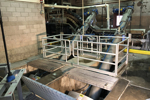
A large treatment plant includes several treatment processes that contribute to providing quality recycled water pursuant to the state of California Title 22 regulations. Major treatment processes include raw wastewater pumping, preliminary treatment, primary treatment, secondary treatment, tertiary treatment with Parkson DynaSand® filters, and disinfection.




WASTEWATER APPLICATION NOTES
-
 Advances In Paper-Based Devices For Water Quality Analysis
Water quality test strips have been around for decades. They are usually constructed from a porous media, including different types of paper, and undergo a color change when dipped into water containing the analyte of interest. These test strips have seen application in swimming pools, aquariums, hot tubs, remediation sites, and other commercial/environmental areas.
-
Dissolved Oxygen Measurement
One of the most important measurements in the determination of the health of a body of water is its dissolved oxygen content. The quantity of dissolved oxygen in water is normally expressed in parts per million (ppm) by weight and is due to the solubility of oxygen from the atmosphere around us.
-
 Background And Summary Of Tests For The 2000PV Restraint
The 2000PV is a restraint for PVC pipe and the standardized mechanical joint. This product is the result of years of testing and evaluation and its performance has been proven by thousands of hours of proof tests, as well as third-party evaluations. This report describes the 2000PV through the 12" size.
-
Chlorine Measurement In Wastewater And Regulated Discharge Requirements
Homes, industry, schools, and businesses all generate sanitary waste, or sewage. Sewage treatment is a multistage process that cleans up wastewater before discharge or reuse. In the final step of the treatment, disinfectants are added to kill disease-causing organisms. Common disinfectants are chlorine gas and sodium hypochlorite. Chlorine dosage levels are designed to leave almost no residual in the wastewater after treatment
-
Active Energy Control – Energy Reductions Of Up To 10% Above Standard Drives
Energy costs continue to increase. At the same time, there is increased pressure to reduce utility bills without sacrificing operations or comfort.
-
 SensyMaster Thermal Mass Flowmeter
SensyMaster helps to improve the operating costs of the most cost intensive process in sewage plants: Aeration. High-measuring performance and state of the art technology helps customers increase plant efficiency.
-
BOD Determination Of Strongly-Loaded Organic Waste Water With The BOD-OxiDirect
Strongly loaded organic industrial waste water, i.e. from sugar or paper factories, need to be pre-treated before determining the BOD value.
-
Improving Compliance Through Real-Time Phosphorus Control
Levels of phosphorus, a chemical element that promotes organic growth, must be controlled in wastewater coming from beverage, food and dairy processing plants. Failure to control phosphorus accurately has a negative impact on water quality and can lead to large fines.
-
 Measuring Low Limit Values For Orthophosphate Using The Phosphax Sc Low Range
Tightening phosphate limits require high-precision monitoring to ensure compliance and economical chemical dosing. Refined photometric methods now offer superior accuracy at ultra-low ranges, providing the stable data necessary to optimize wastewater treatment processes.
-
 LLT100 Laser Level Measurement In Water And Wastewater
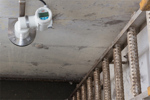
In the water and wastewater market segment, the LLT100 laser level transmitter provides an efficient way to measure levels of liquids.

WASTEWATER PRODUCTS
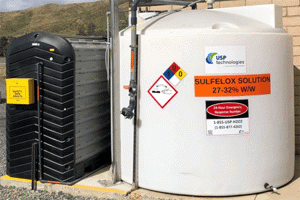
Hydrogen sulfide (H₂S) presents a significant challenge in wastewater management. Its foul odor and corrosive nature can severely damage infrastructure, leading to costly repairs. More importantly, H₂S poses substantial health risks, including respiratory issues and, at high concentrations, potentially lethal effects. Effective H₂S control is not just a regulatory requirement; it's essential for safeguarding infrastructure and public health.
Our Solution:
SulFeLox® is USP’s patented buffered iron solution for wastewater collection system sulfide control, with a hazard rating profile similar to nitrate (1-0-0).

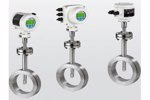
The OPTIFLUX 1300 is an electromagnetic flowmeter (EMF) with lightweight wafer-style design. The meter is an economical solution for applications with conductive liquids (≥ 5 μS/cm) and higher solid content (up to 70%). Unlike the OPTIFLUX 1100, the OPTIFLUX 1300 offers a better accuracy. The flowmeter already meets the demands of many applications in various industries. It has established itself as the preferred solution for OEM machinery applications, dosing systems, compact skids, chemical handling systems or pump and firefighting systems.
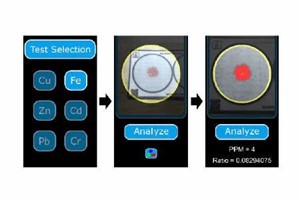
Water quality test strips have been around for decades. They are usually constructed from a porous media, including different types of paper, and undergo a color change when dipped into water containing the analyte of interest. These test strips have seen application in swimming pools, aquariums, hot tubs, remediation sites, and other commercial/environmental areas.
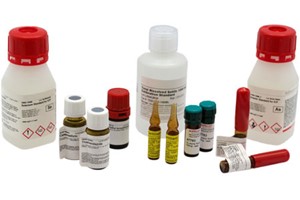
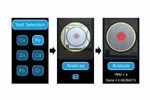
Assure accurate analysis of your water, soil or air samples.
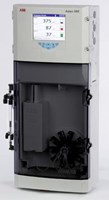
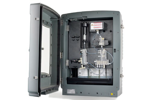
The Aztec 600 Low Range Manganese Analyzer AW634 offers reliable and accurate on-line analysis of manganese up to 0.10 ppm Mn.
LATEST INSIGHTS ON WASTEWATER
-

As many cities developed, streams that once flowed on the surface were buried underground to make way for growing infrastructure. However, as heavier rainfall, extreme weather and aging infrastructure place growing pressure on cities, these buried streams could become part of the solution. Restoring streams to the surface — a practice known as stream daylighting — can help manage stormwater, restore habitats, and create greener, more walkable public spaces.
-
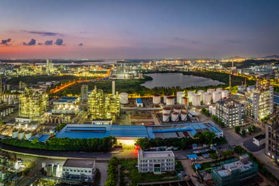
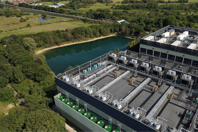
 Data centers are evolving into industrial-scale thermal-management facilities as artificial intelligence (AI), high-performance computing (HPC), cloud platforms, and accelerated computing increase rack power density. Modern AI racks can exceed 50–120 kW per rack, creating substantially higher heat-rejection requirements than conventional enterprise infrastructure. ASHRAE's (American Society of Heating, Refrigerating and Air-Conditioning Engineers) AI Data Center Energy Performance Framework identifies liquid cooling as an important architecture for these high-density environments.
 -

The U.S. Court of Appeals for the D.C. Circuit recently rejected industry challenges to the EPA's designation of PFOA and PFOS as hazardous substances under CERCLA, leaving the agency's April 2024 rule fully intact. While the case centered on the EPA's authority to make the designation, its practical significance for water utilities is simpler: the liability concerns that have accompanied the rule since its adoption remain unresolved.
-

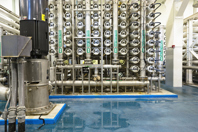
Nearly 45–60% of a reverse osmosis (RO) plant's operating cost is linked to energy consumption, while membrane fouling can reduce productivity by 15–40% and increase cleaning costs by thousands of dollars annually. The newest generation of RO systems is therefore focused on reducing energy demand, extending membrane life, and using intelligent monitoring to predict fouling before performance declines.
-

Decentralized advanced wastewater treatment has become an increasingly effective solution for a wide range of commercial facilities. Fortunately, modern advanced treatment systems provide highly effective, customizable, and cost-efficient solutions that can be tailored to the unique operating characteristics of each commercial site while meeting demanding environmental performance standards.
-

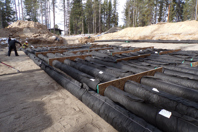
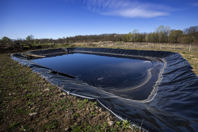
High-density polyethylene (HDPE), linear low-density polyethylene (LLDPE), and reinforced polypropylene (RPP), among other materials, all show up on municipal wastewater and manure lagoon liner projects. Each of these lagoon liners has a place, and the differences aren't just chemistry on a datasheet; they show up physically on site.


WASTEWATER VIDEOS

Kaeser Compressors’ presentation outlines a structured approach to retrofitting modern, energy-efficient blowers into aging municipal and industrial facilities.
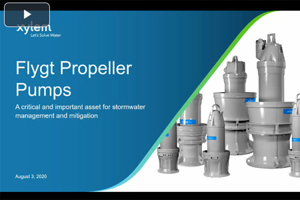
Flygt Propeller pumps play a vital role in stormwater collection, conveyance, and flood mitigation by providing reliable and efficient pumping solutions for municipal, industrial, and utility applications.

In 2010 a unique, patented wastewater lagoon aerator was introduced to the industry. The presentation will consist of a number of ‘proof statements’ showing successes of this new technology.
This presentation explores the tradeoffs between passing solids and macerating them, highlighting where each approach provides advantages and how emerging pump, cutter, and impeller technologies are reshaping solids handling strategies.

Energy-efficient blowers, combined with aeration controls, reduce power costs and optimize aeration performance in wastewater plants.