
DRINKING WATER DISTRIBUTION RESOURCES
-

Aging underground infrastructure can cause severe, invisible non-revenue water losses. Implementing continuous acoustic loggers with AI-driven analytics isolates the precise signatures of subsurface leaks, allowing utilities to target hidden failures early and maximize capital efficiency.
-

Advanced acoustic sensors help growing utilities identify hidden leaks and prevent costly pipe bursts. By shifting from reactive to planned repairs, municipalities can significantly reduce non-revenue water loss and recoup technology investments through operational savings.
-

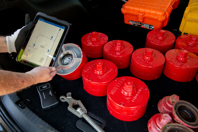
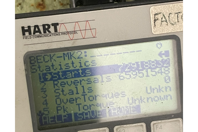
Continuous valve modulation often causes premature motor burnout in critical water infrastructure. Adopting a 100% duty cycle motor design eliminates repetitive maintenance, ensuring precise process control and long-term system reliability.
-

Over the last two decades, utilities have increasingly viewed the transition from automated meter reading (AMR) to advanced metering infrastructure (AMI) as the next step in modernizing their operations. The benefits of moving toward a truly digital ecosystem are well-established, yet AMI continues to face a slow, asymmetric rollout in the water industry.
-

A recent series of workshops convened by The Water Research Foundation (WRF) underscores how utilities are beginning to use AMI data to support conservation, improve system performance, and move toward more proactive operations. The takeaway is straightforward: most utilities now have the data; the challenge is putting it to work.
-
 The water and wastewater industry is currently grappling with a significant aging pipeline infrastructure crisis, a challenge that requires a shift from reactive repairs to proactive, data-driven management. In a recent Water Online webinar, industry experts Christine Ballard (CDM Smith), Greg Baird (Black & Veatch), and Andrew Beck (Garney) outlined a practical framework for addressing infrastructure repairs in ways that are fundable and executable.
 -
 Problems faced by water utilities seem to grow in both quantity and complexity each year. Among the most persistent challenges is non-revenue water (NRW). In a recent Water Online Live event, industry experts gathered to discuss this multifaceted challenge.
 -

Discover how a major utility leveraged advanced in-line isolation technology to abandon an aging water main and prepare for new pipeline infrastructure without disrupting service to nearby businesses or residents at a busy town intersection.
-

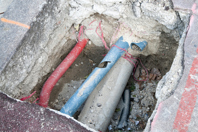
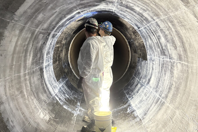
When critical large-diameter water mains suffer catastrophic failure, trenchless carbon fiber reinforcement provides an efficient, fully structural repair. This method eliminates disruptive excavation, completely restoring pipeline integrity and high-pressure capacity from the inside out.
-

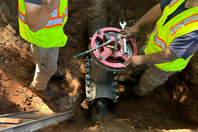
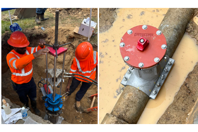
Discover how a municipal utility resolved an urgent infrastructure repair on an active 8-inch water main in just two hours, keeping water flowing to hundreds of nearby residents by avoiding a wide-reaching neighborhood shutdown.




DRINKING WATER DISTRIBUTION VIDEOS
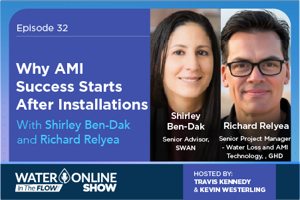
As utilities worldwide race to modernize, advanced metering infrastructure (AMI) has emerged as one of the most talked-about — and often misunderstood — investments in the water sector. In this episode, our hosts are joined by SWAN members Shirley Ben-Dak and Richard Relyea to discuss insights from the SWAN Global Smart Metering Playbook — unpacking why getting meters installed is only the beginning.