
DRINKING WATER MEASUREMENT RESOURCES
-

Lowest-bid actuators can turn a new filtration plant into a maintenance burden. One Illinois facility's repeated failures show why purchase price is only one part of critical valve equipment cost.
-

Physics-driven algorithms and refined data processing are changing how acoustic monitoring finds leaks on large transmission mains, and standardized performance metrics are changing how utilities judge whether those systems work.
-

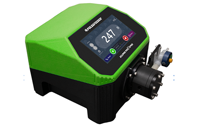
Rotary gear pump design holds flow steady as pressure shifts, pairing integrated digital monitoring with predictive diagnostics and service intervals measured in years rather than months for chemical dosing.
-
 For AI to deliver real operational value, it needs a constant flow of reliable operational data. AI systems are relentlessly data-hungry, and the more data, the better. Yet, accessing this data remains a major challenge in the utilities sector, with remote reservoirs, wastewater treatment works, and sprawling infrastructure often located a long way from traditional cellular networks.
 -
 Expectations for transparency and reliability in water-metering infrastructure have risen. As a result, a fundamental question is emerging across the industry: if modern ultrasonic meters are already smart, why are we still adding intelligence outside the meter?
 -
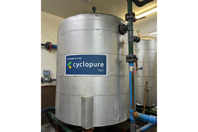
 - DEXSORB Full-Scale")
A DWTP client in Alaska detected elevated PFAS contamination levels in two groundwater wells supplying drinking water to 85 service connections. PFAS concentrations are provided in Table 1, where combined concentration of EPA PFAS6 was detected at 490 to 810 ppt.
-

Non-intrusive ultrasonic technology provides precise, bi-directional flow measurement without process downtime. By clamping onto the pipe exterior, these systems eliminate maintenance and pressure loss, offering a reliable, data-rich solution for complex water and wastewater monitoring environments.
-
 Given the maturation of sensor technology, the scientific and operational hurdles to portable lead analysis are somewhat surprising — but surmountable.
 -

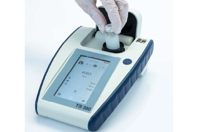
Accurate low-level turbidity monitoring requires a deep understanding of detection limits and the variables affecting measurement sensitivity. Learn how refined laboratory techniques and standardized spiking protocols ensure precision in demanding water treatment applications.





DRINKING WATER MEASUREMENT VIDEOS

On The Water Online Show, Shaun Sharrett, Vice President of Sales at Swan Analytical, examines how continuous online monitoring differs fundamentally from traditional, sporadic testing methods.