
ASSET MANAGEMENT RESOURCES
-

The U.S. water and wastewater industry is standing at an awkward crossroads. For years, technical capabilities, federal funding, and a shared sense of industry urgency have all co-existed in a critical mass. However, the rollout of major infrastructure projects remains sluggish.
-

Stronger storms are exposing the limits of outdated infrastructure. From upgrading capacity to building stronger partnerships, here are five key lessons utilities can apply now to prepare for hurricane season and keep critical water systems running under pressure.
-

Over the last two decades, utilities have increasingly viewed the transition from automated meter reading (AMR) to advanced metering infrastructure (AMI) as the next step in modernizing their operations. The benefits of moving toward a truly digital ecosystem are well-established, yet AMI continues to face a slow, asymmetric rollout in the water industry.
-
 As the FIFA World Cup kicks off across the U.S. this summer, most attention will be on transportation, security, and stadium readiness. But the bigger strain will be less visible: water and wastewater systems.
 -

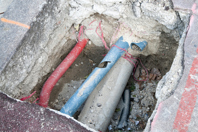
The water and wastewater industry is currently grappling with a significant aging pipeline infrastructure crisis, a challenge that requires a shift from reactive repairs to proactive, data-driven management. In a recent Water Online webinar, industry experts Christine Ballard (CDM Smith), Greg Baird (Black & Veatch), and Andrew Beck (Garney) outlined a practical framework for addressing infrastructure repairs in ways that are fundable and executable.
-

Remote shutoff valves are evolving beyond non-payment management, helping utilities improve emergency response, conservation, compliance, operational efficiency, and long-term system resiliency.
-

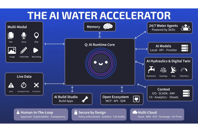
Open intelligence breaks down data silos, allowing water utilities to integrate disparate systems into a transparent, unified framework. This approach combines human expertise with verifiable AI to improve network resilience and operational decision-making.
-

Operational teams can now build custom apps and workflows in plain language, bypassing traditional development delays. Integrating real-time data with hydraulic intelligence enables faster, data-driven decisions to optimize network performance and improve overall system resilience.
-
 The technology landscape for municipal water and wastewater treatment spans everything from inline water quality monitoring to industrial waste reuse program integration. Each category brings measurable operational benefits and real implementation hurdles. Here’s what operators need to know.
 -
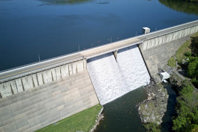
 Getting a second opinion is a time-tested piece of wisdom. During a recent project for a municipal water supply utility, we found that this advice also applies to modeling the effects storms have on the municipality’s reservoirs and dams, and the potential flooding impacts downstream of the dams.







ASSET MANAGEMENT VIDEOS

In this on-demand webinar, Ecolab introduces the next-generation PRSM™ Softening Calculator, a powerful and free tool built to help water professionals evaluate system designs, optimize operating conditions, and clearly quantify total value delivered (TVD).