
New FlowCAM Instrumentation Features Birefringence Imaging To Detect Invasive Mussels Faster And Earlier Than Microscopy
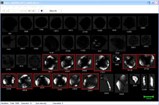
The new FlowCAM -XPL Birefringence Imaging and Analysis System (patent pending) from Fluid Imaging Technologies, Yarmouth, Maine automatically detects and documents the presence or confirms the absence of invasive mussels in a water sample. Ideal for the early detection of zebra mussels, quagga mussels and other aquatic invasive species, the FlowCAM-XPL instrumentation features cross-polarizing filters that reveal individual mussel cells at the larval veliger stage when they measure a mere 50-250um to permit treatment before their growth and entrenchment makes eradication virtually impossible. The FlowCAM-XPL automatically takes a hi-resolution digital image of each veliger and saves it with its data set for analysis and collaborative review. Sophisticated, onboard image recognition technology differentiates the invasive mussel veligers from particles of non-interest including from those that exhibit birefringence.
Automating and upgrading the labor intensive, manual microscopy methods commonly used in attempts to detect invasive mussels, the automated FlowCAM-XPL efficiently processes large sample volumes in minutes to permit rapid mussel veliger detection even when the population is sparse and otherwise non- or not easily detectable. In addition, the potential for human error to overlook veligers or detect false positives is eliminated along with slide preparation and worker fatigue while the results are more reliable and actionable. For impressive versatility, the cross-polarizing filters may be disabled in seconds for switching to the automatic detection of algal cells such as cyanobacteria in lakes, reservoirs and other source water.
For more information, visit: www.fluidimaging.com.
SOURCE: Fluid Imaging Technologies