
DRINKING WATER ANALYSIS RESOURCES
-
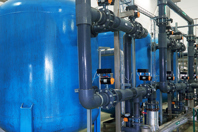
 - DEXSORB Full-Scale")
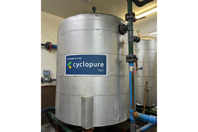
A DWTP client in Alaska detected elevated PFAS contamination levels in two groundwater wells supplying drinking water to 85 service connections. PFAS concentrations are provided in Table 1, where combined concentration of EPA PFAS6 was detected at 490 to 810 ppt.
-
 Given the maturation of sensor technology, the scientific and operational hurdles to portable lead analysis are somewhat surprising — but surmountable.
 -

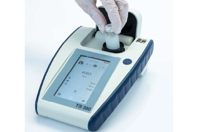
Accurate low-level turbidity monitoring requires a deep understanding of detection limits and the variables affecting measurement sensitivity. Learn how refined laboratory techniques and standardized spiking protocols ensure precision in demanding water treatment applications.
-
 As water systems grow more complex and climate patterns shift, Legionella is emerging as one of the most persistent and underestimated risks in the built environment. The threat to public health from Legionnaires' disease will likely further escalate unless decisive action is taken.
 -

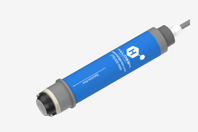
Developed from U.S. Office of Naval Research requirements, this multiparameter chlorine sensor offers extended maintenance-free operation, flow-independence, and automatic compensation for reliable, in-pipe monitoring.
-
 In this Q&A, Dr. Elke Süss of Metrohm addresses the urgent need for haloacetic acid testing in response to “one of the most significant updates to EU drinking water monitoring in recent years.”
 -
 On numerous levels, oxidation-reduction potential (ORP) outperforms the presently predominant metric for evaluating disinfection performance.
 -

In this case study, explore how a municipality automated its water quality testing to ensure compliance in real time.
-
 Insights gained from artificial intelligence (AI) herald a high-water mark for public protection.




DRINKING WATER ANALYSIS VIDEOS

On The Water Online Show, Shaun Sharrett, Vice President of Sales at Swan Analytical, examines how continuous online monitoring differs fundamentally from traditional, sporadic testing methods.